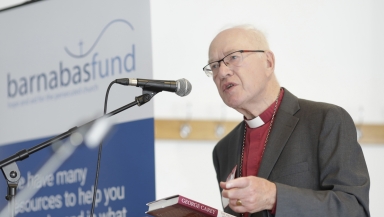
Former Archbishop of Canterbury, Lord Carey, is calling on the British government to allocate time in Parliament for discussing possible legislation around assisted suicide.
Challenging the Church of England's current view, Lord Carey said it was important to stop people from suffering against their wishes, and argued that to do so was "profoundly Christian", The Telegraph reports.
In a submission to MPs, he said that helping someone in great suffering to die would be an "act of great generosity, kindness and human love".
He claimed that legalising assisted suicide would be a reflection of a "compassionate society" and argued that the likes of Oregon, in the US, where it is already legal, show that it can be done successfully.
His comments stand in stark contrast to his own denomination, the Church of England, as well as other denominations, Christians and anti-euthanasia groups which have warned of a "slippery slope".
Anti-euthanasia campaigners have used the example of Oregon, the Netherlands, Canada and Belgium as reasons why the UK should not change the law.
Data by the Oregon Health Authority revealed that in 2022, nearly half of people who died by doctor-assisted suicide did so because they feared being a "burden" on family and friends or caregivers.
The most common reasons given for choosing assisted suicide were the increasing inability to participate in life activities (89%), loss of autonomy (86%), and loss of dignity (62%).
In Canada, the Netherlands and Belgium, assisted suicide is available for people with mental illness. In the Netherlands and Belgium, terminally ill children can die by assisted suicide.
Faith leaders including the former Church of Scotland Moderator, the Rt Rev Iain Greenshields, recently visited the Scottish Parliament where they urged MSPs not to change the law.
Rev Greenshields said: "Our opposition to assisted dying is based on our Christian faith, and involves concerns around the principle of assisted dying, around the application of the law in practice, the perception of the value of human lives, and also the effect which any change is likely to have on the provision of care - in particular, on palliative care."