
The General Secretary of the World Council of Churches has spoken of the common call shared by Pentecostals and ecumenists in fulfilling God’s mission.
“It is my deep conviction that the member churches of the WCC, some of which are Pentecostal, need the closer bond to the Pentecostal churches you represent and it is my humble conviction that you need us,” said the Rev Dr Olav Fykse on the second day of the Pentecostal World Conference taking place this week in Stockholm, Sweden.
It is the first time a general secretary of the WCC has delivered a formal greeting to the Pentecostal World Conference.
Citing Apostle Paul’s first letter to the Corinthians, Tveit reiterated that there are many members, but only one body.
“I cannot say to any brother or sister in Christ that I have no need for you. We need each other because it is only together that we can grow into the one body of Christ,” the ecumenical leader stated.
“The world needs a common and credible witness from the churches about God’s love for this world and for everyone in this world.”
Tveit acknowledged the many challenges that Christians face in the quest for unity, including the need to overcome divisions and prejudices that exclude one from another.
He said he was encouraged by many developments, such as the Global Christian Forum, which brings together Orthodox, Roman Catholic, Anglican, Protestant, Evangelical and Pentecostal Christians to share their faith in Christ and to learn more about one another.
He went on to describe the modern-day Pentecostal movement as one that unites people of different denominations, different races, different classes and different social status in a joint prayer, mission and even a new, common language.
“This liberating and renewing power of the Holy Spirit is a reminder to all of us to not only recognie and search where we are, but also where we are coming from and the new places we will go to find the gifts of God so that the Holy Spirit can empower us to bring peace and justice to the world together,” Tveit said.
Before concluding, Tveit highlighted the “great hope” that members of the WCC and Pentecostal movement share in seeing the search for Christian unity grow.
“[T]he World Council of Churches and Pentecostal churches will find new ways of witnessing to our unity in Christ and sharing in God’s mission. That you have welcomed me here today is one such sign of hope,” he stated.
The Pentecostal World Conference 2010 is the 22nd triennial gathering of Pentecostal groups associated with the Pentecostal World Fellowship. Member bodies of the fellowship include the Assemblies of God, the Church of God in Christ, and the International Church of the Foursquare Gospel, among others.



-

UN officials demand explanation for Iranian church seizure
-

AI could become a ‘very dangerous master’, warns John Lennox
-

Archbishop of Canterbury withdraws award given to Muslim cleric who praised Bin Laden
-

Calls for Church of England to be 'rooted in scripture' ahead of General Synod elections
-

Most practising Christians are evangelical, study finds
-
Church of England blessing same-sex relationships 'a bridge too far'
Most Popular
News

People view religious education positively, study finds
The government is consulting on plans to add RE to the national curriculum.
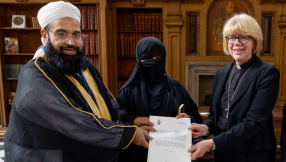
Archbishop of Canterbury withdraws award given to Muslim cleric who praised Bin Laden
Reform leader Nigel Farage said the decision to award Hafiz Muhammad Tahir Mehmood Ashrafi was "astonishing".
How the new General Synod could move beyond the present disagreement over same-sex relationships
How might the next Synod make progress in the next five years based on a recognition that there are those in the Church of England who hold fundamentally opposed positions on the matter? Is there a way of allowing both sides to achieve what they want? Martin Davie argues that the answer to this question is ‘Yes.’
No part of London should become a free speech, gospel exclusion zone
Soho is not exempt from freedom of speech and Christian expression. And Christians do not lose their fundamental freedoms when they cross an invisible boundary into a neighbourhood associated with a different worldview. The streets of London belong to all of us, writes Andrea Williams.








