
|PIC1|Church leaders including the Archbishop of Canterbury have condemned the deadly terrorist attacks on India's financial capital, Mumbai.
Dr Rowan Williams wrote on Thursday to the High Commissioner of India, Shiv Shankar Mukherjee, expressing his shock and outrage at the atrocities and offering on behalf of the whole Anglican Communion prayers for those who have lost loved ones, for the injured and for all those caring for them or dealing with the ongoing siege.
“People everywhere stand in solidarity with the innocent and in condemnation of those who would destroy innocent lives out of evil and misguided motives," he wrote.
Pope Benedict XVI also condemned the "brutal attacks", calling for an end to all acts of terrorism.
A message of condolence released by the Vatican on Thursday said the Pope was "deeply concerned about the outbreak of violence" in the Indian city. He expressed his "heartfelt condolences to the families of those who have lost their lives in these brutal attacks".
At least 130 people including one Briton have died, and more than 300 have been injured in the attacks that began late Wednesday night at 10 locations across Mumbai, including two luxury hotels, the city's main railway station, a restaurant popular with tourists and a hospital.
The head of the World Council of Churches (WCC) has expressed shock and dismay over the terrorist attacks in Mumbai that have killed more than 130 people.
Rev Dr Samuel Kobia said in a letter addressed to Prime Minister Manmohan Singh, "The World Council of Churches, whose membership includes most of India's Christian churches, strongly condemns such wanton acts of terrorism and violence targeting innocent human lives.
"We believe that there can be no justification whatsoever for such despicable acts of terrorism and indiscriminate violence," he added.
Kobia expressed his "sincere condolences and sympathy to the government and people of India, especially to the families of those who were killed and injured".
"We hold all citizens of India in our thoughts and prayers as you pass through this tragic and critical time," he said.
Kobia added, “The WCC is committed to working with governments and people of goodwill to build communities where peace and security prevails.”
In a televised address on Thursday, Prime Minister Manmohan Singh said those responsible were not Indian nationals.
"The well-planned and very orchestrated attacks, probably with external linkages, were intended to create a sense of panic by choosing high-profile targets and indiscriminately killing innocent foreigners," he said.
"It is evident that the group which carried out these attacks, based outside the country, had come with single-minded determination to create havoc in the financial capital of the country.”


-

UN officials demand explanation for Iranian church seizure
-

AI could become a ‘very dangerous master’, warns John Lennox
-
Archbishop of Canterbury withdraws award given to Muslim cleric who praised Bin Laden
-
Calls for Church of England to be 'rooted in scripture' ahead of General Synod elections
-
Most practising Christians are evangelical, study finds
-
How the new General Synod could move beyond the present disagreement over same-sex relationships
Most Popular
News

People view religious education positively, study finds
The government is consulting on plans to add RE to the national curriculum.
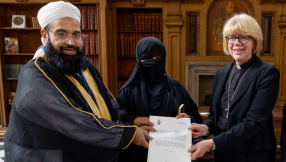
Archbishop of Canterbury withdraws award given to Muslim cleric who praised Bin Laden
Reform leader Nigel Farage said the decision to award Hafiz Muhammad Tahir Mehmood Ashrafi was "astonishing".
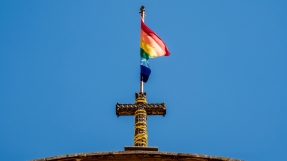
How the new General Synod could move beyond the present disagreement over same-sex relationships
How might the next Synod make progress in the next five years based on a recognition that there are those in the Church of England who hold fundamentally opposed positions on the matter? Is there a way of allowing both sides to achieve what they want? Martin Davie argues that the answer to this question is ‘Yes.’
No part of London should become a free speech, gospel exclusion zone
Soho is not exempt from freedom of speech and Christian expression. And Christians do not lose their fundamental freedoms when they cross an invisible boundary into a neighbourhood associated with a different worldview. The streets of London belong to all of us, writes Andrea Williams.








