
Members of the worldwide Anglican Communion are being urged to pray ahead of UN climate talks next week.
The 17th Conference of Parties (COP17) will bring world governments to Durban, South Africa, next Monday for 12 days of negotiations on global climate strategy after the Kyoto Protocol expires next year.
The Kyoto Protocol committed industrialised countries to reducing their carbon emissions to 5% below 1990 levels by 2012 but nations have struggled to reach agreement on a second period of commitment.
The Rev Canon Rachel Mash, Environmental Coordinator of the Anglican Church of Southern Africa and member of the Anglican Communion Environmental Network, wants greater assurance from world governments that they are taking the issue of climate change seriously.
"Despite 17 years of negotiations to cut warming emissions, current global pledges to cut emissions leave Earth on track for between 2.5 and 4 degrees of warming, widely agreed to be catastrophic,” she said.
"There is little sign that the world’s nations are truly serious about making the emissions cuts that are so urgently needed.
"Short-term economic growth is threatening the prospects for global long-term human development.”
Despite warnings from scientists about the risk of delaying action on climate change, the Guardian reports that the EU and Japan do not expect a new agreement to come into force before 2020.
Next week's talks will include some difficult negotiations between countries on clean technology, the protection of forests, and funds to help poorer countries meet the cost of addressing climate change.
Members of the worldwide Anglican Communion are being challenged to pray for the success of the Durban talks and sign the ‘We have faith: Act now for climate justice’ petition calling for a renewed commitment to tackling climate change.
Canon Mash said, "It is fitting that this gathering takes place on African soil because although Africans are responsible for a tiny proportion of global emissions (with the noted exception of South Africa), Southern Africa is warming at about twice the global average rate.
"Africa will be amongst the world’s most affected nations, threatened by unprecedented droughts, floods, extreme weather, diminishing food security, poverty, forced migration and increased conflict.”
Faith leaders will come together on Sunday at a rally to pray for the talks.
The petition asks leaders to reach an "ambitious" and legally binding agreement on climate change and commit to clear targets to reducing carbon emissions.
It will be handed to COP17 leaders by Archbishop Desmond Tutu.
The petition can be signed at www.wehavefaithactnow.org




-

Many Christians among the missing and dead after Nepal floods
-

Church vows to plough on with Project Spire
-

AI could become a ‘very dangerous master’, warns John Lennox
-

When Eastern Europe appeared to be going Protestant
-

MPs vote against assisted suicide in 'victory for hope, compassion and life'
-

Leaked SNP abortion motion 'deeply troubling'
Most Popular
News
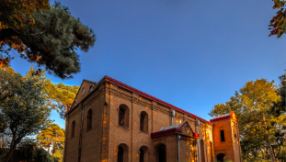
UN officials demand explanation for Iranian church seizure
Iran has not responded to questions fromUN officials.

AI could become a ‘very dangerous master’, warns John Lennox
Apologist and Oxford mathematician John Lennox warned Christians that artificial intelligence could contribute to a generation becoming increasingly disconnected from Scripture and cautioned that technology meant to serve humanity can become a “very dangerous master.”

Catholic baptisms fall sharply across Ireland as births decline and secularisation grows
The number of Catholic baptisms taking place across the whole island of Ireland has fallen by almost 30% over the past decade, with declining birth rates and the growth of religious non-affiliation identified as the main reasons.
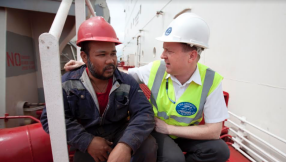
Against backdrop of conflict and tough working conditions, seafarer happiness falls
Seafarer wellbeing has declined for the second consecutive quarter as heavy workloads, restricted shore leave and concerns over pay increasingly weigh on crews, according to new research from The Mission to Seafarers.