A year ago today I was on the early morning train up from London to York for what turned out to be a momentous day. I spotted a number of clergy, decked out in their full garb, and two women vicars sat across from me, giggling the whole way. The excitement was palpable: this was what we'd been waiting for. (And not just because Adrian Chiles called me "yet another under-dressed Christian woman" live on the radio. I wasn't wearing a coat.)
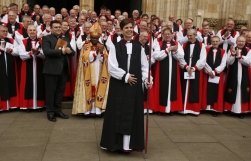
The consecration of the Church of England's first woman bishop Libby Lane at York Minster was magnificent. Even the shouting dissent of Rev Paul Williamson, a lone protester who stepped forward declaring, "No. Not in my name. Not in the Bible," when the congregation was asked to assent did not succeed in altering the mood. His voice was drowned out by a resounding chorus of those in support. And perhaps rightly, he served as a timely reminder that there remain people in the Church who hold to the traditional belief of male-only ordained roles.
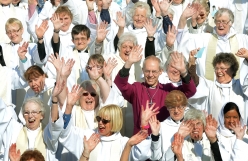
As the day went on, celebrations continued. TV stations and broadcasters flocked to the scene, and hundreds of people milled around the Cathedral, wanting to be a part of it. Men and women embraced, and more than a few tears were shed.
Since Lane's consecration, seven more women bishops have been appointed; two of them – Bishops Rachel Treweek and Christine Hardman – to sit in the House of Lords as Lords Spiritual, and more will be fast-tracked in under government legislation. It's been a remarkable year. Yet in an interview with the Independent last weekend, Lane said: "One of the most moving things about this extraordinary year is how ordinary it has been."
The appointment of women bishops is "the new normal," she added. "The Church has moved so quickly... the appointment of women bishops is [now] as expected as the appointment of men."
This, surely, is something worth celebrating. That men and women are now given the opportunity to flourish freely in the Church, and follow God's calling into consecrated leadership. That the Church has finally aligned itself with the model Jesus offered in valuing people fully, regardless of gender. That – just as the first people to report Christ's resurrection were women – so too, now, can women proclaim freely from the pulpit that Christ is risen, and he welcomes and equips all.
And what is perhaps even more exciting, are the opportunities this new season will offer to young women throughout the Church of England and beyond. Lane and her fellow women bishops are a sign that all are invited to partner with God, and to bring their gifts to the table.
"If a young woman thinks her choices are limited, lifts her eyes and thinks, 'Perhaps I can do something extraordinary,'," Lane says, "that's a good day."