Nick Clegg says it would be better for the Church and State to "stand on their own two separate feet".
But the Church of England has received support from other faiths - and is welcoming it. Speaking this morning on the BBC's Today programme, the Bishop of Rochester, James Langstaff, said: "The non-Christian faiths are actually pretty strong in their support of things like the establishment, because it maintains within our public life a space in which to talk about faith and to take faith seriously."
Hindus are among those supporting the status quo. There are 817,000 British Hindus in the UK according to the 2011 Census, and the Managing Director of Hindu Council UK, has come out to say he believes his fellow Hindus actually benefit from the Church of England's position as the established Church.
Challenging the Deputy Prime Minister's suggestion that Church and State in Britain are too intertwined, Mr Bhanot said: "They are hardly joined at the hip that they depend on each other for their daily dose of secular politics and spiritual peace, respectively."
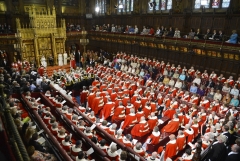
The Church of England's primary benefit to the Hindu community and other faiths is "a tiny proportion of the parliamentary space, an inclusivity of faith which otherwise would be assigned to the wilderness".
"From our Hindu minority point of view we would feel left stranded alone since the Church by reason of its disestablishment would have no obligation to look after us for our engagement in the political process."
Mr Bhanot shares the view of the eight leading philosophers who recently wrote to The Telegraph arguing that the Church of England's "Christian humanism" is responsible for the exceptionally tolerant legal system in Britain today.
It is this support for tolerance offered by the Church of England that makes Mr Bhanot wary of any attempt to remove it from its place in state affairs.
"[If disestablished] the Church will I am sure definitely remain inclusive towards all faith minorities, but it will have not have a mechanism – in state – to promote that inclusivity at a political level.
"[The Church of England] has found its rightful place to foster an inclusive representative democracy by allowing faith a marginal voice."
Dismissing concerns about the power of a religious body in the state, Mr Bhanot suggested that the Church of England's establishment was completely different from situations in Pakistan and Saudi Arabia "where secular policy is thwarted by [religious bodies] more often than not".
Mr Bhanot also disagreed with those who suggest that lacklustre attendance at church services makes the establishment of the Church of England an anachronism.
"Faith is important to people, and it is not so much about church or temple attendance, which is bound to fall in this busy life led by instant messaging, instant decisions, higher stress levels, and people choosing to relax first through all the entertainment channels readily available," he says.
"People need a sense of belonging, a sense of purpose beyond the daily mundane living, and their faith provides them with a direction to make the right choices, especially allowing for the 'other' person."
The ultimate importance of the Church of England, in Mr Bhanot's view, is that it ensures that different points of view, not only places and people, are represented as Parliament goes about its duties.
"A representative democracy is not just about votes and numbers, as perhaps the Deputy Prime Minister would have it, but how different intellectual opinions are represented in forming policy that affects all the people," he said.