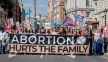
On Saturday 13 December the ‘Unite the Kingdom’ movement is having a carol service in Whitehall Central London entitled “Putting Christ back into Christmas”. It is billed as “believers from across the nation gather to honour the true meaning of Christmas- the birth of Jesus Christ. Bible readings, worship, testimonies, and the beginning of a new Christian revival in the UK. This event is not about politics, immigration or other groups. It is about Jesus Christ, fully and completely.”
The organisers say it will include Bible readings and reflections led by priests, pastors, ministers, and a bishop, as well as live music and worship, a gospel band and opera singers, and personal testimonies from Christians about their faith journeys.
So far so good. So why have so many church leaders and denominations come out against it? Because the event is being organised by Tommy Robinson, who is, to say the least, controversial. Often described as ‘Far Right’ – a term which has become increasingly meaningless – Robinson is seen as an unlikely standard bearer for Christianity. Despite his professed conversion to evangelical Christianity last year, this is being treated as though it were an event run by the Anti-Christ requiring an immediate and emergency response.
The media have reported that a coalition of denominations including the Church of England, Baptist Union of Great Britain, Methodist Church, and United Reformed Church have released a "rapid response" resource pack for local churches, encouraging prayers, sermons, and actions on December 14 (the day after the event) to address Christian nationalism and the "co-option of Christmas for a nationalist agenda".
The Leeds Diocese has unveiled a series of billboards saying “Outsiders welcome” that it plans to install in bus stops over the festive period. Churches Together in England, which represents 54 member denominations, said the posters with their slogan “Christ has always been in Christmas”, would send “a clear message of love for all our neighbours, resisting agendas of division and hostility”.
They issued a statement declaring, “We must confront and resist the capture of Christian language and symbols by populist forces seeking to exploit the faith for their own political ends."
As Giles Fraser wrote in Unherd, “At Christmas, our churches resound with angels singing ‘Fear not’. In contrast, Robinson spreads fear. That is his political currency. But that is not the Christian message. And we will sing that in my church with gusto: ‘O hush the noise, ye men of strife, And hear the angels sing.’”
So what can we make of this? Is this just another version of the so-called ‘culture wars’ with two tribes shouting past one another? Are we reduced to a simple binary choice – either you support the Christian celebration being organised by Robinson, or you reject it as a cheap stunt which uses Christian symbols for political purposes?
I think that those who question the motivation of the organisers have some good reasons for doing so. In reading the publicity for the event, it is clear that the claim of the organisers, that it is not about politics or immigration, is at best disingenuous. The e-mail sent out to Robinson’s supporters states that they “envision a vibrant assembly of dedicated patriots, coming together to lift our spirits with beloved carols that proclaim our enduring devotion to faith and homeland”. They go on to say, “far more than a simple performance, this is a rallying cry for our core principles - a shining light in the midst of turmoil caused by unchecked immigration and the fading of our cultural identity”.
But does this justify the outpouring of scorn and opposition that some of the churches have poured out? Why the fierceness of the opposition? It seems to me that the stench of hypocrisy is in the air.
The Beam and the Speck
Consider the following. We are told that the objection is to “the capture of Christian language and symbols by populist forces seeking to exploit the faith for their own political ends". But we are being told this by leaders who themselves continually use captured Christian language and symbols to exploit the faith for their own political ends. Leaders who cannot tell us what God says about salvation can tell us what God says about the EU, immigration, climate change and Donald Trump! It used to be said that the Church of England was the Tory party at prayer. Now it seems more accurate to describe it as the Green/Labour/Progressive party at politics.
These leaders complain of spreading fear but they themselves are experts in phobiaism - “Oh look, Tommy Robinson is having a Christmas Carol service. Fascism is on the rise. Be Afraid. Be very Afraid! We must create an emergency pack to deal with this imminent threat to the nation. Issue a statement to the Guardian!” All while spreading the fear of supposed Islamophobia, in the name of Christ - whom Muslims deny. What a perverse world we live in. Such leaders who complain about using Christianity to promote political views should take the beam out of their own eyes before they take the speck out of their brothers’ eyes.
A Kingdom Divided
Then there is the whole question of division. The contrast they put is simple, and surprisingly for such educated people, simplistic. Ironically in the name of unity their language is incredibly divisive. On the one hand we are told that the ‘Unite the Kingdom people’ are on the side of “hatred, division and fear”, whereas they are - as the bishops of the Diocese of Southwark have declared - “better than this”. They are the ones who chose “compassion and understanding over hostility and conflict”. Can they not see how divisive this is? Labelling everyone who does not agree with their politics as hateful bigots.
Christ at the Heart of Christmas
Those who oppose Robinson’s attempt to put Christ at the heart of Christmas tell us that “Christ has always been at the heart of Christmas — and those who claim him need to be serious about what he stands for.”
Indeed. But in this instance Robinson is surely right? Christmas has been turned into a commercialised, sanitised, politicised ritual with the meaning reduced to little more than ‘let’s all be nice to each other because a cute baby was born to a teenage mum and became a refugee’. I remember one Church of Scotland church where the tradition was that up to a thousand people from the local community would come to the midnight carol service. The people loved it - lovely lights, nice carols, and a saccharine inoffensive message. Until one year a new minister decided he would actually preach about Christ. It nearly caused a riot. Even the drunks wondered why the minister was bringing Christ into Christmas! Within a couple of years, the attendance was down to 100. The last thing most people want is a real Jesus in their fantasy Christmas.
Christmas in far too many churches is so boring (thankfully there are some wonderful exceptions). I could write the report of most of the major church leaders' Christmas messages right now. In fact, I could just ask AI. It’s the same old, same old, every year.
If we really knew and taught about Jesus, we would not come up with such simplistic memes as “Jesus came to bring unity not division”. I have just been reading in John 7 about how Jesus brought division – and how he always does. Similarly in Luke 12:51, he says, “Do you think I have come to bring peace on earth? No, I tell you, but division.” Certainly, the angels sang of great joy and peace being brought on earth (Luke 2:14), but it is peace to “those on whom his favour rests”. There are people who reject Christ – and who do not receive his favour. In fact, that is the great dividing line in humanity – not between those of different nationalities, not between the middle-class church leaders and the working class ‘populists’, but between those who accept and those who reject Christ.
Because here is the shocking truth of Christmas: Jesus Christ is more divisive than Tommy Robinson. Christ is the stumbling block and folly (1 Corinthians 1:23). He is the baby who was born to die for our sins. And he is the king who will return to earth as judge and saviour.
So, I wish Tommy Robinson well. I hope and pray that Christ will really be exalted in his carol service in London on Saturday. If the worst fears of some are realised and it turns out just to be another political rally, then it makes little difference. Christ is still Lord and his kingdom will still come. Although I suspect that I would be more likely to hear the actual gospel of Christ at Robinson’s rally on Saturday, than I will in some churches on Sunday.
But, in the spirit of Christmas, I also wish Tommy Robinson’s critics well. I hope and pray that they will stop using their own personal Jesus for their own personal politics and instead come to know and proclaim the Christ who really is there. I hope they will focus on Christ and not on Robinson. And for all of us, maybe we should all be seeking to do what we can to ensure that the real Christ really is the centre of our Christmas.