There are young women and men who are old enough to join the UK's armed forces who have lived their whole lives under the shadow of war. A generation of 16-year-olds are now able to join up (the UK is the only country in Europe which regularly recruits under 18s). They have never known a time when British forces were not deployed in a serious, bloody conflict somewhere in the world.
This is the backdrop to the vote to commit British forces to the fight against ISIS in Syria. The decision isn't happening in isolation. British forces are already targetting ISIS in Iraq – but that is only the immediate context. The bombing of ISIS is the latest military intervention in a long line of often interlinked wars.
Just prior to those 16-year-olds being born, the 1998 Good Friday Agreement was signed, which reduced the role of the British Armed Forces in Northern Ireland. But no sooner had that happened than they were being deployed as part of the NATO bombing of Serbia during the Kosovo conflict.
That 1999 engagement was followed in 2000 by our intervention in Sierra Leone. Afghanistan followed a year later, soon followed by the infamous 2003 invasion and occupation of Iraq. More recently, British forces have been involved in bombing Libya. And now the House of Commons has voted to commit British forces to air strikes in Syria.
The historian Charles A Beard, writing in the 1940s about America, could well have been describing British foreign interventions of the last 15 years when he coined the phrase, "Perpetual war for perpetual peace."
Of course, in some ways, it's arbitrary to only look back 15 years in history. We could look at the history of the 20<sup>th Century as a whole and see British involvement in war through almost every year. The sheer number of conflicts in which British forces were involved is astonishing.
The problem with just listing a litany of conflicts is that it's too blunt. It takes no account of the different strategic, moral and humanitarian justifications that each of them might (or might not) have had. People in Kosovo named their children after Tony Blair because of the perceived success of our intervention. In Sierra Leone Blair is still considered a hero, for his role in securing peace.
In Iraq, though, British flags have been burned in the streets in the wake of a legally and morally bankrupt invasion and occupation. In Libya, there is chaos after a hasty bombing campaign happened and there was little thought for re-building the shattered country. In Afghanistan, where hundreds of British soldiers died, any progress towards freedom and democracy seems slow and stilted at best. At worst, the country is regressing to the control of the Taliban.
In this context it's hard to view the decision to bomb ISIS (or Daesh as we're told they hate to be called) in isolation. No one doubts ISIS has committed horrific atrocities. Even those who don't support the current bombing campaign realise their depravity. We're talking about a group responsible for beheading children, massacring Christians and torturing homosexuals, while treating women as slaves. That's before we even mention their potential threat to us in Europe.
But anyone who tells you that the decision over whether to join the bombing campaign is a simple, easy one is probably selling you Snake Oil.
On the one hand, Daesh are fascists. From Cable Street to Spain, and from El Alamein to The Battle of the Bulge, British people have proudly stood up to fascism. The woman-hating, Christian-hating, joy-hating fascists marching under the black flag of Daesh have to be opposed. No-one disagrees with that. But there remain so many questions. Will bombing really degrade the power of Daesh? Can a chimerical, guerilla-style force really be tackled by bombing or will civilians bear the brunt of the bombing raids? Is there any willingness to put 'boots on the ground' and if not, can we ever expect peace? Will the bombing actually make us more of a target for militant attacks on British cities? And so on...
On the other hand, there are wise and experienced voices suggesting that bombing can't and shouldn't be used here. The situation on the ground too complex. There's no end game in sight. There's certainly no plan to bring lasting peace – indeed, how can there be when there are so many competing forces in the seventh circle of hell which we used to call Syria and Iraq?
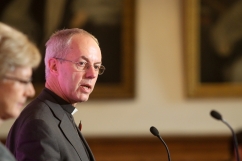
There are those who've argued (including the Archbishop of Canterbury) that we have to address Saudi Arabia, if we're going to address ISIS – indeed many of the crimes for which we castigate ISIS (beheadings, crucifixions, persecution of minorities) are carried out by our allies, the Saudis, to whom we sell our arms and fawn over their despotic leaders.
Those 16-year-olds born in the shadow of war are now old enough to contribute to one. Once again the bombers darken the skies. Innocent people will certainly die. This should surely give us reason to stop and think. But let's do the actual thinking and not resort to lazy social media stereotypes. Not everyone who opposes bombing is a terrorist sympathiser. Not everyone who supports bombing is a bloodthirsty warmonger. These are questions of life and death and we must continue to wrestle with them even now the decision has been made. We have to find a better way of engaging with the world than perpetual war. We owe it to generations yet to be born.