Another week, another controversy about education league tables... The new Teaching Excellence Framework ratings were released and some top universities did not fare as well as expected. Sir Christopher Snowden, vice-chancellor of the University of Southampton, said the system "appears devoid of any meaningful assessment of teaching.
Elsewhere, the Chief Inspector of Ofsted – the organization which assess the performance of schools – looks set to use a speech to condemn those schools which put their league table performance above their pupils' needs.
You'd be forgiven for thinking that we're all agreed that league tables were a bad thing. In the last 20 years, though, they've become the measure by which we assess the performance of a number of public institutions. Which leads to the thought... What about a league table for churches?
We've all been in a new town or city for the weekend and wondered which church we should visit. Should we be adventurous or stick with the sort of thing we're likely to know? How warm will the welcome be? What kind of hymns will be sung? Will we be shivering in our pews or comfy and cosy in an ergonomically pleasing seat?
A league table would cut out all the anxiety. It could be constructed in much the same way at the university tables, using different metrics to come to an overall score. Warmth of welcome would be combined with warmth of building and a host of other factors to produce the definitive league table.
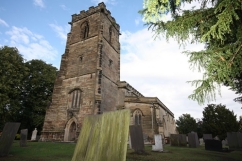
The great Cathedrals would square off against village chapels, mega churches and shop-front Pentecostal congregations to sit at the top of the table and welcome the visitors who would no-doubt come flocking.
Those at the bottom of the pile would know they would have to improve. Music not up to scratch, coffee not hot enough or a sermon dragging on too long would all be highlighted and much-needed improvements could be made.
Such a service is already offered, in a way – without the League Table element. The long-running site Ship of Fools offers the wonderful Mystery Worshipper section in which they dispatch a correspondent to services at random to report on the duration, quality and content of a given service.
All we'd need to do is tally up the research, pile up the league tables and see the quality vastly improve. If it was done comprehensively, there'd be no need to sit through a bad sermon in a draughty building ever again.
Horrified yet?
Let's hope you are. This idea really isn't a good one – quite apart from the obvious practical considerations: there are around 15,000 Church of England churches alone in the country, never mind all the other denominations.
Yet we do have a sort of informal league table already. In each town and city across the country there are churches branded 'exciting', 'vibrant' and 'thriving', while others attract monikers such as 'struggling' or 'aging'. We may not have a full league table, but at times it seems that a simialr system operates, with 'successful' churches at the top and the rest straggling behind.
The main problem with league tables in education and other areas of public service is they introduce the idea of market-style competition to an arena where it shouldn't have a role. The instinct to improve public services by highlighting their strengths and weaknesses is a good one. But making it into a competitive exercise and treating members of the public as merely consumers is wrong-headed.
This is why it would be a terrible idea to have a church league table. Churches aren't a consumer service that we can chose to use or not, in the same way as coffee shops or hair dressers. We are the church. So while it would be a good idea to be reminded of the importance of welcome, decent refreshments, good quality music and all the rest, it shouldn't be done with the threat of a mass walk-out to the table topping congregation down the road.
Speaking about St Peter, GK Chesterton said, 'the historic Christian Church, was founded on a weak man, and for that reason it is indestructible. For no chain is stronger than its weakest link.'
He's right of course. We should always be striving for excellence in our churches – it's essential that we make our worship accessible and attractive to people seeking to meet God. Yet we are real people – the foolish things chosen to shame the wise. With that in mind, if the league table idea ever did come to fruition, it might be a good idea to find a church hovering around the relegation zone rather than one at the top of the pile.