
I have clear memories of the Cuba Missile Crisis. I was just fourteen at the time but the events of October 1962 are etched indelibly on my memory. I can still recall, for example, lying in bed listening to the radio while President Kennedy outlined his ultimatum to the Soviet leadership.
I understood then (but obviously not as clearly as I know now) just how close we came to all-out nuclear war, and it came as no surprise to be told the next day that my art master had spent hours on a local mountain pleading with God to save us from our madness. (How telling that our hopes for nuclear peace were based on a programme appropriately designated ‘Mutually Assured Destruction’!
It’s been good to spend some time thinking about the crisis again, and I have learned a great deal as I have listened to the man who went to bed with the nuclear codes strapped to his chest, and read Michael Dobbs’ blog. I was particularly intrigued to discover that at very the moment Secretary of State Dean Rusk claims to have uttered the most vivid soundbite of the crisis - "we're eyeball to eyeball, and the other fellow just blinked" - the Soviet missile-carrying ships were 500 miles away and heading back to Russia. As is so often the case, the facts are rather different to the popular version of events.
Dobbs has suggested that one of the greatest dangers was that of miscommunication and I can believe that given a story that was published in Newsweek in August 2000. It still leaves me gasping with a sense of incredulity, and I can’t help wondering why so few commentators refer to it. It would appear that following the shooting down of a U2 spy plane Robert Kennedy (the President’s brother) advised Soviet ambassador Dobrynin that the Russians had just twenty-four hours to give an assurance that they would withdraw their missiles from Cuba, otherwise they would be ‘removed’. Kennedy also implied that he didn’t know how much longer they could control the hawks in the US military because “the Generals are itching for a fight”.
Dobrynin quickly sent an account of this meeting to Moscow, but incredibly, he sent it via Western Union Telegraph because there was no other means of immediate transmission! He wrote later that he watched the young boy pedal off into the night, praying that he would not stop off for a Coca Cola or to dally with his girlfriend. And that’s how a young lad on a bicycle came to play a pivotal, if unsuspecting role in cold war history.
Like Michael Dobbs I am fascinated by the question of human agency in history. Are we the subject of inexorable, impersonal forces or are we able to make a difference and influence the shape of things to come? Christians can surely only answer that question in one way: we can and should be making a difference because God expects us to do just that.
Who knows, my art teacher may have played as pivotal a role in averting nuclear war as the young lad on the bicycle. God’s people should never forget that eternity alone will show just how important we have been in the furtherance of God’s plans, however insignificant we feel or however ordinary the tasks we have been given.



-
Nicky Gumbel elected to Church of England parliament with a call to put evangelism first
-

Pastor died after wooden arch fell at Big Church Festival, inquest hears
-

John Lennox urges Christians to overcome fear of sharing their faith
-
Are we ready to battle for the Gospel?
-

Church warden and rector lead legal challenge against Church of England's Project Spire
-

Anti-Christian harassment continues to rise in Jerusalem
Most Popular
News
US Episcopal Church membership falls below 1.5 million as decades-long decline continues
The US Episcopal Church has reported a further decline in membership and worship attendance, with new data it has fallen below 1.5 million members despite signs of post-pandemic stabilisation.
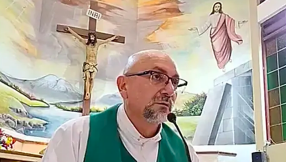
Priest dies after cross falls on him during livestreamed Mass
A priest in Guayaquil, Ecuador, has died after a crucifix fell on him during an evening Mass on Saturday.

Christians remember Aberfan disaster 60 years on
It was described by one individual as "the ministry of tears".

Churches must do more to equip Christians for evangelism, says J John
Churches need to devote more time and resources to evangelism and do more to equip their members to share their faith with non-Christians, evangelist Canon J John has said.





