
Acupuncture, as practiced in traditional Chinese medicine, may offer some relief from migraine pain, a new study suggests.
Italian researchers found that regular treatments with "true" acupuncture helped improve symptoms in 32 patients whose migraines had been resistant to standard preventive medication.
Moreover, the therapy worked better than two forms of "sham" acupuncture used for comparison, the researchers report in the medical journal Headache.
Past studies have yielded conflicting results as to whether acupuncture can aid in migraine treatment. Some research has suggested that sham acupuncture, using blunted needles that do not pierce the skin, is as likely to bring relief as is the real therapy - calling into question the actual biological effects of acupuncture.
However, a problem with this research is that studies have had inconsistent designs, and many have used acupuncture points that are "inappropriate" based on Chinese medicine, according to the authors of the new study.
Acupuncture has been used for more than 2,000 years in Chinese medicine to treat a wide variety of ailments. According to traditional medicine, specific acupuncture points on the skin are connected to internal pathways that conduct energy, or qi ("chee"), and stimulating these points with a fine needle promotes the healthy flow of qi.
For the current study, Dr. Enrico Facco, of the University of Padua, and his colleagues looked at how traditionally performed acupuncture stood up against two sham forms for preventing migraines.
They randomly assigned 160 migraine sufferers to one of four groups:
in one, patients received twice-weekly sessions of acupuncture using traditional acupuncture points; a second group received sham acupuncture as it is usually performed in studies; a third group also underwent sham acupuncture, but with the blunted needles touching traditional acupuncture points; the fourth served as a control group, in which patients received no acupuncture or preventive medication.
The participants in all the groups were given medication to treat any migraine attacks.
Over six months, Facco's team found, only the group receiving true, traditional acupuncture showed lasting improvement in migraine disability measured on a standardized scale, compared with the control group.
The "main novelty" of the study, Facco told Reuters Health, is that the therapy was based on traditional Chinese medicine, but studied using the modern, "Western" scientific method.
The results are promising, he said, but more studies are needed to confirm the benefits of traditional acupuncture for migraine. However, Facco added, since the therapy carries little risk of side effects, it could be worth a try for migraine sufferers who are not adequately helped by standard preventive treatment.
It's not completely clear why acupuncture might ease migraine pain. In addition to the traditional theories on qi, modern research has suggested that acupuncture may work by altering signals among nerve cells or affecting the release of various chemicals of the central nervous system.




-

The dire American political situation: a brief overview for faithful Christians in Britain
-

Conversion therapy ban supporters want prayer to be criminalised - this must not be allowed
-

Why the US election results do not bode well for America
-

Police appeal for witnesses after head smashed off Jesus statue at church war memorial
-

Are we seeing the end of Western civilisation?
-

Archaeologists may have discovered identity of mystery skeleton in Westminster Abbey
Most Popular
News

‘Major achievement’ hailed as Israeli officials step in to stop anti-Christian harassment
Harassment against Christian is sometimes justified by appeals to the Jewish religion.

What do Christian young women and men need to know about the opposite sex and themselves?
The first thing that Christian young women and men need to know is that the Bible is the operating manual for humans.
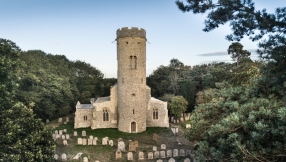
Saxon church saved from Historic England’s ‘at risk’ register after extensive repairs
Historic England has added 197 sites to its Heritage at Risk Register. However it has also managed to save dozens of buildings, including a 1,000-year-old church.

Trump’s midterm defeat and its implications for Christians on both sides of the Atlantic
America’s power and influence on the world stage, combined with Trump’s unpredictability and volatility, is a worrying mix.





