If comedy cannot cheer its very creators, then where does its power lie?
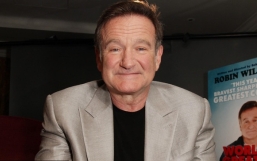
When Robin Williams' death was announced, articles and comments about the relationship between comedy and mental health issues mushroomed overnight. The preponderance of brilliant comedians who are bipolar or struggle with addictions or depression – Stephen Fry, David Walliams, John Cleese, Ruby Wax, Dave Chappelle, Jack Dee to name a few – has been well-documented. Whether classroom clowns and outsiders from early days or drawn to comedy to mask inner turmoil, comedians view the world offset from the norm, provoking laughter for the audience, which doesn't necessarily rebound on its source.
This askew view is immensely valuable. Often comedy calls out truth through the absurd: not so different from the role of the Old Testament prophets, who similarly could be diagnosed with mental health issues. It bites because it first disarms us through laughter. Just moments after chuckling at the silly futility of their actions, we well up with tears at the concluding scene of Blackadder Goes Forth, as the witty comrades finally go over the trenches into certain death.
There is power in comedy when it is employed not to conceal the pain of the performer, but to expose the folly of the wider world. The eccentric or outlandish perspective from an effective comedian can be prophetic by uncovering injustice through ridicule. In some cases, like that of Mark Thomas, this moves from stand-up to standing up for those who are oppressed: from words into action. The community activist Shane Claiborne calls Christians to holy mischief – prophetic stunts and theological pranks, which cause people to be disrupted by humour, then challenged by a deeper cause. Claiborne writes: "When someone keeps us laughing, we don't even think to become defensive. We are disarmed by a gentle revolution".
Laughing in the face of injustice, in particular, in a time of such profound suffering, may seem callous – a luxury for those who are not caught up in the immediacy of conflict or deprivation. But the Green MEP, Molly Scott Cato, writes about the value of harnessing laughter as a form of protest itself, citing the example of the Rebel Clown Army standing against nuclear weapons. She explains in Carnival Kingdom: "This laughter is only partially an indication of humour or joy; a deeper interpretation might be an expression of the need of the human spirit to reject the despair that both war and crisis can bring, fulfilling the deeper psychological function of laughter as a technique to dispel their threat to psychic wholeness."
Proper laughter – full-bodied, uncontrollable laughter – cannot happen within a climate of fear. It is a sign of freedom. In a context of oppression or inequality, it is an act of subversion, which announces that the current scene is not the final one. Laughter is a symptom of the kingdom of God breaking in: "Blessed are you who weep now, for you will laugh" (Luke 6:21b).
There is no account of Jesus himself having a giggle, but to inhabit the fullness of human experience, laughter must have been a feature. The missiologist Michael Frost describes Jesus's ministry as being a "jester in the court of human affairs", poking fun at pomposity and turning the whole societal order on its head. Moreover, Jesus laughs not just at political and religious authorities, but spiritual powers too. After what appears to be the closing scene in a tragedy, the resurrection proves to be the punchline. Christ has the last laugh. Sam Wells puts it like this: "Two days after the greatest catastrophe there has ever been or ever will be – Easter erupts, laughing, infectiously, uncontrollably, in a way that diminishes no one, denies nothing, leaves no one out..."
Christianity is not a joke, but the narrative arc of our story is closer to a comedy than tragedy. Comedians who expose the comic nature of powers that believe they will rule the day, who ridicule purveyors of fear, who uncover truth through laughter – these are the prophets of our age. May their gift to the world become their own good medicine too.
Alexandra Lilley is a curate in the East End of London.