What makes community? How on earth do we build it and sustain it? Michel Quoist was a French Catholic priest, born in 1918, who had a thought or two about the subject. He lost his father when he was 14 and entered the ministry in 1947. Very few people have heard of him these days even though his book sales once ran into the many millions. For a while he was a voice that spoke to a generation of people who felt alienated and alone.
His first book, Prayers of Life, was published in 1954 and was just that; a series of prayers that reflected the vulnerability and the appalling loneliness of the priest and extent to which those whom he ministered to were lost. Quoist's later writing never quite lived up to his first masterpiece. However, in 1965 he wrote a book about how to bring about an end to loneliness and to how to create a community that lasts.
His cure for alienation was to listen to those who had no one to listen to them: 'You have to make your way through life a bit more slowly, you have to take the trouble to stop for a moment, you have to be genuinely interested [in the other person's life].'
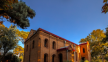
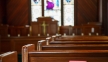
It is this lesson that we have decided to learn from in our little unglamorous parish church in Wembley: we listen. Three years ago we were sat in church wondering how to get people in the streets around us interested. Our parish is about 70 per cent Hindu and over the years it would be fair to say that we had drifted away from our local community. We were that building tucked away by the bus stop that people came to occasionally when it became a polling station.
We began with questions. Where is our community hurting? Is there anything we can do about it? What we knew was that we knew many older people who were suffering with Alzheimer's and we also knew that many people were living alone and didn't see a living soul all week. Out of this came the Memory Café. With no money to fund anything, we knew that whatever we did needed to be cheap to run. The café's two co-founders and I did the work and our strategy was to start quickly and see how it went.
Within three weeks we had put posters up and started the Memory Café. The approach we started with still exists today: we welcomed people with real warmth and sat and listened to them; we learned their names: we provided some quizzes to help stimulate the memory: and we had really good cakes, biscuits and tea and coffee. Now, we get more than 100 people each week from all sections of our multi-ethnic community. We have a choir – about to sing at Southwark Cathedral – and an exercise session each week.
It is beautiful. And we have found something most extraordinary happening; a new community involving people from across all ethnicities is thriving. And there's no reason why they shouldn't spring up everywhere. In fact, more than a dozen other cafés have started using our model and we have a website to help others to start their own café.
What has amazed us the most is that this is a genuine community. People mix and we hear each week that our estate is now more cohesive and, yes this an odd word, happier.
A while ago I popped over to pick up my prescription at the local pharmacy. The pharmacist, a Hindu, asked if he might talk to me in the consulting room. I was suddenly panicking that I had done something wrong. 'Father Steve,' he said, 'I just wanted to thank you on behalf of my community for doing so much for us.' The truth is that his community has blessed us more than he could ever know.
This article appears on the RSA website and is reproduced with permission.
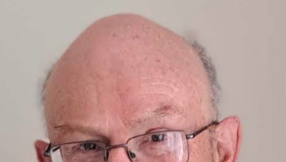
Rev Steve Morris is the parish priest of St Cuthbert's North Wembley. Before being a priest he was a writer and ran a brand agency. In the 1980s he tried to become a pop star. Follow him on Twitter @SteveMorris214