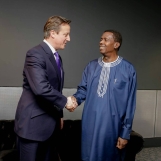
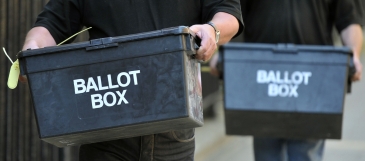
Trust – or more precisely the lack of it – has arguably been the defining theme of this General Election. This was plainly demonstrated during last week's BBC Question Time debate, when a studio audience was finally able to take on David Cameron, Ed Miliband and Nick Clegg and provide a level of interrogation that was almost brutal at times.
"Is needing a law to guarantee your lower tax rises promise an acknowledgement that you were in the habit of lying in your pre-election promises?" "Why do you think voters don't trust your party with the NHS?" "Five years ago, the outgoing Labour Treasury Minister left a message: 'There's no money left.' How can we trust the Labour Party with the UK economy?" "Your promise on student loans has destroyed your reputation. Why would we believe anything else you say?" And so it went on with Miliband admitting at one point that "Trust is so low in politics."
In the past many of us voted for the party who, in our minds, could be trusted to run country most effectively, but now the general assumption is that none can be trusted and it comes down to who will break the fewest promises and do the least worst job. The outcome is debilitating for our democracy. As a result voter confidence is at rock bottom and too many choose not to vote at all.
It's easy to lay the blame squarely at the feet of our politicians. Sometimes this is justified. When David Cameron's government announced that he would be bringing in same-sex marriage legislation despite failing to mention it in the Conservative manifesto and then took no notice of a 600,000-strong petition calling for marriage to remain distinctively between a man and a woman, it's not surprising that many Christians with strongly held beliefs felt utterly let down and rejected.
However, too often the ultimate reason that politicians fail to keep their promises is due to the attitude of the electorate. If politicians honestly gave us the whole picture, telling us, for example, where exactly spending cuts will fall and how big they will be, they know full well they'd lose many, many votes as a result. Because we are too unwilling to accept that much of politics involves making difficult decisions that are not going to please everyone, our politicians are driven to over-promise at the risk of under-delivering as they compete for the votes of a fickle public. We have ended up with a situation where everyone is tainted and no politician who is or has been in power comes away unscathed. What makes this far worse, thoug,h is the public's unwillingness to forgive.
Let's turn to the Bible for a moment and remind ourselves of some famous heroes of the faith. Would we have trusted Moses who was a murderer and went into hiding for decades? Would we have wanted David, following his forced sex with a married woman and arranged killing of her husband to be our king? Would we have believed any promises Peter might make after he denied any knowledge of Jesus, having said the exact opposite to Jesus' face only a few hours earlier? Would we have had confidence in Paul's integrity after he had systematically hunted down Christians, imprisoning and threatening them with death?
All of us fall short in life, but some, through their positions, have to live this out in public. God used these individuals we read about in the Bible for great and miraculous things despite flaws in their characters and serious errors of judgement. Just because our political leaders have been unable to fulfil every pledge and have had to go back on promises made, that does not automatically mean they should not be afforded any respect or confidence. If we were in their position with the unpredictability and pressures of running a country, there is every chance that we'd find ourselves making the wrong choices too.
If there is a role for the Church and Christians to play in restoring trust in politics, it will surely come from encouraging and exercising the same level of grace and forgiveness towards those in power as we have received from God. If we write off and refuse to forgive someone like Nick Clegg, who has spent most of the last five years saying sorry and apologising for breaking his pledge not to increase university tuition fees, then what hope is there for the restoration of our democratic system?
It needs to be said alongside this though, that grace and forgiveness is not the same as an open cheque. Jesus calls his followers to be innocent as doves, but also as shrewd as snakes. To offer forgiveness for past failures is not the same as naively accepting everything at face value or blinding refusing to pay attention to whether the same mistakes will be repeated. Character, ideology and policy are not the same things. We should fully accept that politicians will never give us everything we want and get many things wrong along the way, but we still need to be wise enough to look to put those in power who by their convictions and track record will do the best job.
Politics is never a straightforward or easy game and neither is voting for the right party, when 'right' is so difficult to determine. But as Christians we should at least make sure on Thursday as we vote that we are offering the same grace to our candidates that God has so lavishly demonstrated to each one of us.