
Among the swirl of mixed reactions over The Episcopal Church's recent statement to temporarily halt pro-gay actions, the head of the Anglican Church of South Africa applauded the announcement, calling it a move toward reconciliation.
|PIC1|"The Anglican Communion now has a basis for going forward together," said Cape Town Archbishop Njongonkulu Ndungane in a statement Tuesday, according to The Citizen newspaper in South Africa.
Just days ahead of a Sept. 30 deadline set by Anglican leaders who met in Dar es Salaam, Tanzania, in February, the Episcopal House of Bishops released a response to the leaders' directive, which called for an unequivocal pledge not to consecrate another openly gay bishop or authorize the blessing of same-sex unions.
The Episcopal Church (TEC) - the U.S. branch of Anglicanism - had caused uproar within the worldwide Anglican Communion when it consecrated an openly gay bishop in 2003.
In their response, Episcopal bishops said they will "exercise restraint" in approving partnered gays as bishops and authorizing public rites of the blessing of same-sex unions.
They also, however, called for "unequivocal and active commitment to the civil rights, safety, and dignity of gay and lesbian persons."
After reviewing the statement, the Joint Standing Committee, a high-ranking Anglican panel, said earlier this month that the Episcopal response met the requests of the Anglican leaders. According to the committee's report, The Episcopal Church has "given the necessary assurances sought of them."
Conservatives, however, have condemned the response, calling it another dodge to the requests made by the Anglican leaders who more specifically wanted the American church to change course from their departure from traditional Anglicanism and orthodox Christianity.
Nigeria Archbishop Peter Akinola, arguably considered the most powerful Anglican leader, said "the unequivocal assurances that we sought have not been given."
It "seems clear from first reading that what is offered is not a whole hearted embrace of traditional Christian teaching," said Akinola in his initial response.
The Church of England Evangelical Council, which recently released their response, also stated that The Episcopal Church has not met the leaders' directive.
"We believe TEC′s response does not meet the requests of the Primates from Dar es Salaam, not merely for clarification but for repentance and turning back from their clear intention to affirm same-sex blessings and the consecration of practicing homosexuals to the episcopate," stated the council. "They have continued to widen a gap of their own making. As a result, the fabric of the Communion is torn almost beyond repair."
Cape Town Archbishop Ndungane, however, who is notorious for his liberal stance on homosexuality, commended The Episcopal Church's willingness to pause on pro-gay actions and said it has "committed itself to reconciliation."
"Now the rest of the Anglican Communion must make sure the moment is not lost," he said, according to The Citizen.
Orthodox Anglicans still believe, however, that The Episcopal Church has chosen to walk apart from Scripture and the rest of the Anglican family.
Most notably, the Episcopal head, Presiding Bishop Katharine Jefferts Schori, had reaffirmed the church's position at a public forum in San Francisco shortly after the Episcopal bishops' meeting in New Orleans.
She said the U.S. church is willing to "pause" homosexual ordination and blessing same-sex unions but will not roll back support for the "full inclusion" of gays and lesbians.
"We're not going backward," Jefferts Schori affirmed.
With 77 million members, the worldwide Anglican Communion is the third largest Christian denomination in the world. The threat of a worldwide split has been hanging over the church body since the ordination of V. Gene Robinson of New Hampshire as the first openly gay bishop in The Episcopal Church in 2003.
-

Churches must do more to equip Christians for evangelism, says J John
-
John Lennox urges Christians to overcome fear of sharing their faith
-
US Episcopal Church membership falls below 1.5 million as decades-long decline continues
-

Young people are finding their way to the Christian faith through media, says bishop
News
-
Priest dies after cross falls on him during livestreamed Mass
-
Nicky Gumbel elected to Church of England parliament with a call to put evangelism first
-
John Lennox urges Christians to overcome fear of sharing their faith
-

Pastor died after wooden arch fell at Big Church Festival, inquest hears
-
Are we ready to battle for the Gospel?
-

Anti-Christian harassment continues to rise in Jerusalem
Most Popular
News
Ebola death toll mounts as outbreak spreads further across DR Congo
Healthcare workers are struggling to contain the disease amid shortages of essential medical equipment and ongoing insecurity.

Research suggests married mothers are happier
New research has suggested that married mothers report significantly higher levels of happiness than those who are single or unmarried.
US Episcopal Church membership falls below 1.5 million as decades-long decline continues
The US Episcopal Church has reported a further decline in membership and worship attendance, with new data it has fallen below 1.5 million members despite signs of post-pandemic stabilisation.
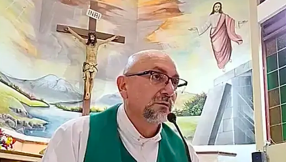
Priest dies after cross falls on him during livestreamed Mass
A priest in Guayaquil, Ecuador, has died after a crucifix fell on him during an evening Mass on Saturday.








