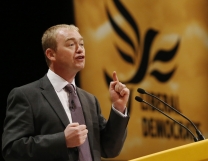
Last week, the Liberal Democrats elected a leader who is openly, passionately and unapologetically Christian. Tim Farron's faith does not appear to be 'like Magic FM in the Chilterns' – fading in and out, as the Prime Minister once described his own faith. Rather, Farron has said, "Christianity, I am convinced, is not 'a bit' true. It is either not true, or it is so compellingly utterly true, that almost nothing else matters."
Perhaps unsurprisingly, he has faced some rather hostile scrutiny about his faith since Thursday's appointment. The Times leader on Friday made the bizarre claim that Farron's faith meant he "failed to embrace the quintessentially liberal idea that every person has equal moral worth." In the BBC's Today programme, senior interviewer John Humphreys questioned Farron about his faith with what was reported in the press as a "sneering" attitude.
There have been a number of Christian responses to this. Many have focussed on how an atheist or Muslim would not face similar suspicion. Whether or not that is true (and I'm not sure it's entirely relevant), here are six suggestions on how, as someone working as a Christian in politics, I think Christians can respond:
1. Rejoice
I remember the story the Rev David Robertson (of The Dawkins Letters) tells of turning up to a church where members were bemoaning the recently published God Delusion. "But it's brilliant!" replied Robertson, "everyone's talking about God! They might have all the wrong ideas, but now you have a chance to tell them the right ones."
Having a passionate Christian, other than a church leader, in the news, in a role where his faith will be scrutinised, probably means millions of people in this country being exposed to a Christian's faith for the first time in their life. Indeed, to my shame, I'm sure many of my work colleagues have learned more about Christianity through a couple of articles on Farron than through months of working alongside me. They might be all sorts of wrong ideas – but suddenly, Christian faith may be a talking point, rather than just Wimbledon, the weather or Wolf Hall.
2. Inform
This gives us a real opportunity to talk about our faith. 1 Peter 3:15 says this is something we should prepare for, not just react to. So think about how you can move a conversation about faith influencing a political leader, onto a conversation about how your own faith influences your life.
In terms of mixing faith and politics, people tend to think immediately (and often negatively) about George Bush Jr. But you can also point to the Christian politicians of the 17th century who demanded that a democratic parliament (not the authoritarian Charles I) had the mandate for government; the leading lights of the movement to abolish slavery in the 18th century; Christian socialists and other social reformers like Elizabeth Fry, or the jubilee debt campaign. There are plenty of examples of people's faith influencing their politics for the good.
3. Confess
We should, however, acknowledge than Christians get it wrong as much as anyone else. The church is a collection of sinners who have been forgiven – not good people who have 'made it'.
4. Point to Christ
If you're going to have a conversation about Christianity, don't waste it on politics! Try and get to Jesus and the gospel as soon as you can. Again, as 1 Peter 3:15 instructs us, think ahead about how you can do this.
5. Pray
There are so many good things we can pray: for opportunities to speak with friends, and for Tim Farron, who people would love to tear down. Pray that the public debate leads to people knowing more about Jesus; pray that Farron's leadership will lead to more opportunities to speak about Christianity with those around us; and pray that God would raise up more Christians in the public eye who have the courage to express and explain their faith.
6. Remember: faith doesn't prescribe policy
Finally, if people really want to talk politics, it's worth pointing out that Christianity doesn't prescribe certain policies. I know many keen Christians in each of the major, UK-wide political parties. If you want to judge if Tim Farron's politics are dangerous, look at his political record over 27 years. Liberal Democrat members did, and they voted him in as party leader.
Johnny Monro works in Parliament as a researcher and speechwriter.