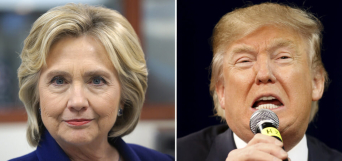
Should the next US president be offensively blunt about Islamism? Republicans think so, Democrats don't

Should the next US president be blunt about Islamist terror even if it means offending Muslims as a whole? Nearly half of Americans think so, while half want him or her to be more careful – but there's a marked difference between Democrat and Republican voters.

The findings come in a Pew survey that reveals widely differing attitudes towards Islam among Americans. Two-thirds of Republican voters – 65 per cent – believe the next president should be blunt about Islam, while 70 per cent of Democrats and Independents say the president should "speak carefully about Islamic extremism so as not to criticise Islam as a whole".

The study also found around half of Americans think at least some Muslims are anti-American, including 11 per cent who say "most" or "almost all" are.

The survey also shows most people think the problem with religious violence is concerned with the people rather than the religion, with 68 per cent saying some violent people use religion to justify their actions. Only about a fifth (22 per cent) say the bigger problem is that the teachings of some religions promote violence.

Among the one-in-five respondents who said some religions promote violence, 14 per cent said Islam did so as opposed to only one per cent who said Christianity.

Responses to the survey show clear evidence of bias along party and religious lines. More than half of Democrats say "just a few" Muslims are anti-American, while around six in 10 Republicans think at least "some" US Muslims harbor anti-American views, including one-third who think at least half of Muslims are anti-American.

Republicans are twice as likely as Democrats to say some religions espouse violent teachings.

Broken down by religious grouping, most black Protestants (62 per cent) say a future president should not criticise Islam as a whole. But 61 per cent of white evangelical Protestants say the president should speak bluntly about Islamist extremism even if it means being critical of Islam.

related articles
Evangelicals rally behind Trump while atheists back Clinton

Evangelicals in the United States are rallying behind Donald Trump while it is the "nones" who back Hillary Clinton, according to new research from Pew.

Fall in Americans who feel churches make a difference to social problems

Four in ten Americans no longer believe that churches and other houses of worship make a difference when it comes to tackling social concerns, according to Pew Research Center findings

Franklin Graham says he is 'terrified' by number of violent Muslims

Franklin Graham has said he is "terrified" by the number of Muslims prepared to carry out violence.

Religious people oppose genetic engineering to enhance human abilities

The more religious a person is, the more likely they are to oppose genetic engineering that could enhance minds and bodies, and help babies suffering from genetic diseases.

News
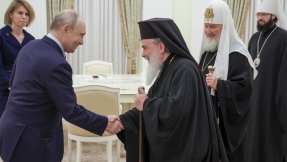
Orthodox Patriarch of Jerusalem meets Vladimir Putin

The pair discussed peace with Ukraine and Christians in the Middle East.

Archbishop says Church must address struggles of clergy and congregations

Dame Sarah Mullally has said that the Church of England’s funding model needs attention as she acknowledged that "too many clergy are struggling".

Jonathan Aitken says Russell Brand asked him for prayer after rape conviction

Former Conservative minister and now Anglican prison chaplain, Jonathan Aitken, says the convicted comedian has asked for prayer.

Attacks on Christians in Europe rise by 44%, report finds

Recorded attacks on Christians in Europe rose by 44% in 2025, according to a new report that also raises concerns about restrictions on the public expression of Christian faith.