
Until now, schools have only been required to teach pupils the biology of reproduction. Consequently, most children have not been presented with a rounded understanding of sexual relationships in the much wider context of personal, social, political and economic relationships.
If young people are to be equipped to make more informed decisions about when and with whom to engage in sexual activity, they need to grasp that sex cannot be considered in isolation from either their own personal development or other personal interactions and that sexual relationships have an inevitable impact on all our other relationships.
Although sex reinforces intimate relationships, sex cannot create intimacy. Parts of our culture and media are therefore wrong when they portrays sex as a shortcut to intimacy. In fact, casual sex actually undermines a person's life chances of finding true intimacy. For, if we practice treating relationships as disposable and as though they have no impact on us or on those around us, then of course we are going to find it difficult to break that habit when we finally try to settle down in a long-term, stable relationship.
Over the last couple of generations, we have all allowed ourselves to be conned by the barrage of "My life, my card" advertising that constantly tells us "It's all about you!" As a consequence, our identities have become increasingly narrowly defined by a self-centred focus on our sexual relationships, at the expense of our wider networks of relationships. In reality, to borrow another, more insightful slogan, "I am who I am because of everyone."
Personal wellbeing and contentment in life are best predicted by the breadth and depth of a person's social connectedness - that is, the extent to which we have close friends and confidants, friendly neighbours and supportive co-workers.
The Government should however be advised against prescribing the content of the sex and relationships instruction too rigidly. School communities, including parents, teachers and governors, and the children themselves, should be given the freedom to decide locally what content would be most appropriate in their classes.
Lessons will need to be sensitive to local cultural and religious dynamics, as well as to the age of pupils. Otherwise, if the state is perceived to interfere and we increasingly come to expect the Government to do everything, then many parents and families will further abdicate their own responsibilities to the next generation, which will undermine the very network of relationships that we ought to be promoting. The more people are encouraged to share responsibility in preparing children for life, the greater the chances will be that the initiative proves successful.
The Jubilee Centre is a Christian social reform organisation based in Cambridge.
Further information about the Jubilee Centre's work can be found online, at www.jubilee-centre.org
-

Churches must do more to equip Christians for evangelism, says J John
-

John Lennox urges Christians to overcome fear of sharing their faith
-

US Episcopal Church membership falls below 1.5 million as decades-long decline continues
-

Young people are finding their way to the Christian faith through media, says bishop
News
-

Nicky Gumbel elected to Church of England parliament with a call to put evangelism first
-
Priest dies after cross falls on him during livestreamed Mass
-

Pastor died after wooden arch fell at Big Church Festival, inquest hears
-

John Lennox urges Christians to overcome fear of sharing their faith
-
Are we ready to battle for the Gospel?
-

Church warden and rector lead legal challenge against Church of England's Project Spire
Most Popular
News

Ebola death toll mounts as outbreak spreads further across DR Congo
Healthcare workers are struggling to contain the disease amid shortages of essential medical equipment and ongoing insecurity.

Research suggests married mothers are happier
New research has suggested that married mothers report significantly higher levels of happiness than those who are single or unmarried.
US Episcopal Church membership falls below 1.5 million as decades-long decline continues
The US Episcopal Church has reported a further decline in membership and worship attendance, with new data it has fallen below 1.5 million members despite signs of post-pandemic stabilisation.
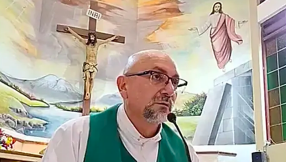
Priest dies after cross falls on him during livestreamed Mass
A priest in Guayaquil, Ecuador, has died after a crucifix fell on him during an evening Mass on Saturday.





