
I was delighted to read that the Archbishop of Canterbury chose to highlight the place of RE in his final Easter Sunday sermon. If nothing else it made a welcome change from the issues of gay marriage and women clergy.
He was right to focus on it too. It does seem strange that religious education has been left out of the new English Baccalaureate despite protests from the church, and a nationwide petition calling for its inclusion signed by more than 120,000 people.
We have discovered a similar enthusiasm for spiritual issues in Wales. In just under a month a petition to protect collective worship sponsored by Evangelical Alliance Wales has collected over 2,200 signatures – the second highest number since the Welsh Assembly started their petition system four years ago – and almost eight times as many as a similar British Humanist Association petition that called for its abolition.
The petition has even gained support in the Muslim community with Saleem Kidwai of the Muslim Council of Wales suggesting that collective worship is good for all people in Wales because: “It provides children and young people of all backgrounds and faiths an opportunity to learn about spirituality.”
Even the BBC’s “Newsround” has entered the ring. It marked its 40th anniversary by focusing on the issue of children’s spirituality. The programme surveyed over 1,000 children aged 6 to 12, and then 1,000 adults who'd been that age 40 years ago, before comparing the answers. Astonishingly, it discovered that today’s children are twice as likely to say that religion is important compared to 40 years ago – although they are half as likely to know the Lord's Prayer.
Much has been about this widespread ignorance of the Lord’s Prayer, but the survey raises lots of other issues too. We might well ask, for example, why the production team opted to focus on the question of spirituality in the first place, given the prevailing secular environment. In fact it made me smile. It seems to suggest that you can take children out of the church but you can’t take the God-shaped hole out of a child!
Dr Williams was surely right when he asserted that, “There is plenty to suggest that younger people, while still statistically deeply unlikely to be churchgoers, don’t have the hostility to the faith one might expect,” and that young people take faith seriously “when they have a chance to learn about it”.
But true as that is we should never rely on our schools to promote our faith; that’s the church’s job! It’s why I grasp every opportunity I can to get children thinking about “the bigger issues”. And it’s what makes me such an avid supporter of the ‘GSUS Live Project’.
‘GSUS Live’ offers secondary pupils an interactive learning experience designed to show the relevance of Jesus’ teaching in the three key areas of fear, rejection and forgiveness. Two mobile classrooms, complete with a fully functioning multimedia computer suite, accommodate classes of up to 32 Key Stage 3 pupils for a 45 to 60 minute lesson.
It’s been thrilling to see classes of twenty and more completely absorbed by the challenges thrown up during their lessons, and seriously wondering what advice they should give their “virtual friend”.
Interestingly, one local teacher told me that, in her experience, the majority of pupils opt to deal with the issue of rejection. That’s quite disturbing but it ought to remind us that we have good news for those who feel this way. God knows what is to be rejected too, but he continues to love us in spite of that.
I’m glad to say that the Pembrokeshire pupils experienced the ‘GSUS Live Project’ just before Easter were not taught to mindlessly recite the Lord’s Prayer but they were assured that God loves them unconditionally. And when it comes down to it, we all need to know that!



-

Edinburgh University ends divinity programmes as theology faces a changing future
-

Why the Archbishop of Canterbury’s award controversy matters
-

More than one in four US Protestant churchgoers believe some biblical truths become outdated
-

Catholicism in France has 'collapsed'
-

Christian leaders issue ‘sober and urgent call’ for Western Church to prepare for disruption
-

Australia's anti-therapy laws harm the most vulnerable - Britain should not copy them
Most Popular
News

Active faith linked to happier marriages and lower divorce rates, study finds
People who regularly attend church are more likely to report happy marriages, according to a new report examining the relationship between faith and family life.
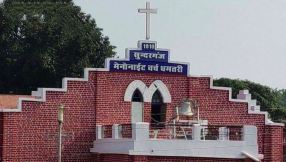
Indian churches fearing anti-conversion laws tell non-Christians: enter at your own risk
Churches in Dhamtari, a town in the central Indian state of Chhattisgarh, have put up notices warning non-Christians that they enter at their own risk, weeks after a law against religious conversion came into force in the state.

£1k bursaries to help churches develop youth and community mentoring programmes
Churches across the UK are being offered bursaries to help them establish mentoring programmes aimed at supporting young people and others in their communities.

World Evangelical Alliance celebrates 180th anniversary
The World Evangelical Alliance (WEA) has held an online celebration to mark its 180th anniversary. Hundreds of people from more than 22 countries attended, and the event was rebroadcast to accommodate different time zones.








