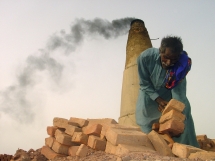
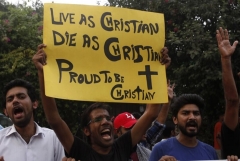
A move to end the use of children in brick kilns in Pakistan's largest province has met with fierce resistance from employers – but Christian campaigners have welcomed the government's resolve.
According to Punjab's Labour Department, there are more than 6,000 brick kilns in the province employing nearly 24,000 children under the age of 14. Many of them belong to families working as bonded labourers in order to pay off debts at huge rates of interest, effectively a form of economic enslavement.
The government of the Punjab passed the Prohibition of Child Labour at Brick Kilns Ordinance on January 14.
According to CLAAS, which supports persecuted Christians in Pakistan, most brick kiln workers in the Punjab are Christians.
Nasir Saeed, director of CLAAS-UK, welcomed the ban on child labour, saying: "They are treated inhumanly and are not provided with any facilities, including health, despite working in detrimental conditions. The whole family has to work as a unit to earn enough money to pay off their existing generations-old debt, and for their own living."
He told Christian Today that the move by the Punjab, where 60 per cent of Pakistan's population live, was a very positive step but that banning child labour should be a national policy. "Pakistan has ratified the international Convention on the Rights of the Child," he said. "There should be no child labour at all."
The measure was passed by the Punjab government in the teeth of opposition from owners of the lucrative kilns, where bricks are hand-made in often dangerous conditions. It has shown every sign of rigorously enforcing the law. Penalties include fines of £50,000 and six months' imprisonment and the sealing of the kilns. According to The Nation news service, so far 17 arrests have been made and 31 kilns sealed. Hundreds of brick kiln owners have staged demonstrations and gone on strike against the new regulations.
Two Christian brick kiln workers, Shama and Shahzad Masih, were beaten and burned to death in the kiln where they worked after false charges of desecrating the Qur'an were brought against them.
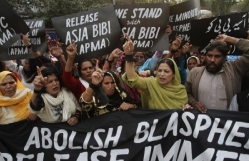
Christians and other minorities in Pakistan are vulnerable not just to random acts of violence in the Muslim-majority country but to charges arising from the abuse of the strict blasphemy laws, often used to settle private scores.