Pakistan: More than 1,400 cases of blasphemy last year

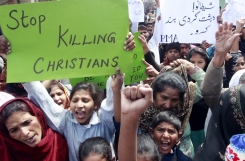
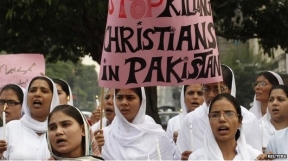
More than 1,400 cases of blasphemy were registered in Pakistan last year, a senior lawyer has claimed, and it is becoming increasingly dangerous for lawyers to defend the accused.

Syed Mumtaz Shah, a top lawyer in Pakistan, made the claim at a seminar on religious freedom in Karachi, Fides news agency reports.

Leaders and representatives from civil society and religious groups gathered to discuss human rights at an event organised by the Pakistan Institute of Labour Education and Research.

A spokesman for the association of lawyers in Karachi said "even for lawyers it has become dangerous to do their job and defend a defendant accused of blasphemy".

Pakistan's blasphemy laws have long been blamed for increasing inter-religious tensions across the country. Those who are accused of "defiling the Prophet Muhammad" face the death penalty, while life imprisonment is given for damaging the Quran. "Insulting another's religious feelings" can result in up to 10 years in jail.

Human rights groups say the blasphemy laws are frequently misused by extremists, and false charges are often brought against minority groups in order to settle personal scores or to seize property or businesses. One of the most well known cases is that of Asia Bibi, a Christian woman accused of blasphemy and now facing the death penalty. Her case made global headlines when two prominent politicians were assassinated after trying to help her.

Last year, a Christian couple were beaten and burned to death in a brick kiln following rumours that they had burned pages from the Quran. They were later proved innocent, and 106 people were charged with their murder.

The US Commission for International Religious Freedom this year said Pakistan represented "one of the worst situations in the world for religious freedom" and recommended that the administration designated it a 'country of particular concern'.

In the State Department's International Religious Freedom Report for 2014 released yesterday, the Pakistani government was blamed for failing to "investigate, arrest, or prosecute those responsible for religious freedom abuses promoted an environment of impunity that fostered intolerance and acts of violence".

"Government policies did not afford equal protection to members of minority religious groups, and due to discriminatory legislation such as blasphemy laws...minorities often were afraid to profess freely their religious beliefs," the report said.


related articles
Over £2 billion in UK aid sent to countries where Christians face persecution

Over £2 billion in UK aid sent to countries where Christians face persecution

Pakistani army warns Christians of possible ISIS attacks

Pakistani army warns Christians of possible ISIS attacks

Persecution in Pakistan: Four Christians at risk of extrajudicial killing

Persecution in Pakistan: Four Christians at risk of extrajudicial killing

Pakistan: Christian family accused of blasphemy and attacked for drinking from mosque tap

Pakistan: Christian family accused of blasphemy and attacked for drinking from mosque tap

Religious freedom under threat worldwide as abuses increase, US says

Religious freedom under threat worldwide as abuses increase, US says

News
Active faith linked to happier marriages and lower divorce rates, study finds

People who regularly attend church are more likely to report happy marriages, according to a new report examining the relationship between faith and family life.

Indian churches fearing anti-conversion laws tell non-Christians: enter at your own risk

Churches in Dhamtari, a town in the central Indian state of Chhattisgarh, have put up notices warning non-Christians that they enter at their own risk, weeks after a law against religious conversion came into force in the state.

£1k bursaries to help churches develop youth and community mentoring programmes

Churches across the UK are being offered bursaries to help them establish mentoring programmes aimed at supporting young people and others in their communities.

World Evangelical Alliance celebrates 180th anniversary

The World Evangelical Alliance (WEA) has held an online celebration to mark its 180th anniversary. Hundreds of people from more than 22 countries attended, and the event was rebroadcast to accommodate different time zones.