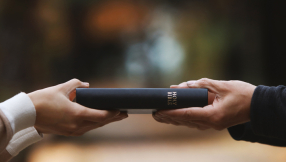
Islamic religious authorities in the Malaysian State of Selangor has seized more than 300 Bibles amid a long-running language dispute.
The Bibles were written in the Bahasa Malaysian and Iban languages, but because of their use of the word "Allah" to mean "God", they are deemed to be in breach of local laws, a decree from the Sultan, and an appeals court ruling from October 2013.
The Selangor Islamic Religious department (Jais) raided the offices of the Bible Society of Malaysia on Thursday afternoon. According to one of the society's executive council members, Nic Ng, the premises were closed for stock taking, and there was an initial standoff between the Society's staff and the 20 Jais officials and two police officers due to the lack of any kind of warrant.
"We were told that we were under investigation for breaking a Selangor state law banning non-Muslims from using the word Allah," said society Chairman Lee Min Choon.
"My staff called me and I also told Jais [it] had no jurisdiction over us," Mr Ng said in AsiaOne.
Another council member described his confusion at the situation: "At the door, they said they wanted to come in as there were Bibles containing the word 'Allah'. But that is nothing new and should not come as a surprise, this is what we do, import Bibles containing the word as allowed in the 10-point solution made by Minister in the Prime Minister's Department."
Eventually though, the chairman let the officers in, fearing they would force their way in if their standoff continued.
Chairman Lee and manager Sinclair Wong, were taken to Damansara Utama police station where they made statements before later being released on bail.
The new director of Jais, Ahmad Zaharin Mohd Saad, said in AsiaOne that the raid followed an investigation on the society.
Mohd Saad said: "I ask for all parties to give Jais and the police the opportunity and space to carry out further investigations."
Reuters described the raid as a "marked escalation" from the standard pattern of enforcement of such laws, normally limited to confiscation of Bibles at checkpoints on the border with Indonesia. It reflects a demographic shift, as Christians from Malaysia's poorer rural states Sarawak and Sabah in Borneo continue to move to the more urban areas to look for work.
The Council of Churches of Malaysia has said in a statement that it was "alarmed" by the raid. It pointed out that the government had a responsibility to "protect religious rights as provided under the Federal Constitution".
The government insists that its actions in this case were perfectly legitimate. "There are laws in Selangor and there was a decree by his Royal Highness the Sultan so what they are doing is carrying out the Sultan's decree," said Deputy Prime Minister Muhyiddin Yassin.
Director Mohd Saad recently expressed his intentions to write to all the churches in Selangor, reminding them of the need to comply with the Non-Islamic Religions (Control of Propagation Among Muslims) Enactment of 1988.
"We will write to all the churches in Selangor to respect the law that is in force in relation to this," he was quoted as saying.
The law prohibits non-Muslims from using 35 Arabic derived words including "Allah", "Nabi" (prophet), "Injil" (gospel) and "Insya'Allah" (God willing).
The editor of the Catholic Weekly Herald, Reverend Lawrence Andrew, responded by saying that churches would continue to use the word Allah in church services.
Disputes over use of the word Allah as a national issue in Malaysia hit a peak in December 2009 when a court ruled that the Herald was allowed to use the word Allah when referring to God in Bahasa Malaysian. This provoked widescale protests and civil unrest, with arson attacks against churches and mosques across the country.
Last October the appeals court overruled that decision on the grounds of public order and exclusivity of the word Allah to the Islamic faith, stating, "The usage of the word Allah is not an integral part of the faith in Christianity." The ruling argued: "The usage of the word will cause confusion in the community."
"Allah is not a Malay word. If they [non-Muslims] say they want to use a Malay word they should use Tuhan instead of Allah," Zainul Rijal Abu Bakar, a lawyer representing the government, told the BBC.
This was disputed by Reverend Andrew, who is quoted by the BBC as saying: "Allah is a term in the Middle East and in Indonesia it is a term both for Christians and Muslims. You cannot say that in all of the sudden it is not an integral part. Malay language is a language that has many borrowed words, Allah also is a borrowed word."
Some have viewed this raid as a political distraction, orchestrated by the ruling coalition of Prime Minister Najib Razak as poor Malaysian Muslims are angry about cuts to government subsidies, which have led to increased prices on sugar, petrol, and electricity. There is the suggestion that tacit condoning of this raid will give this group an issue they can support the government on.
Tony Pua, a Malaysian MP for the constituency of Petaling Jaya Utara has said he plans to bring up the issue of this incident in Parliament as soon as possible.
"It is a clear trespass against freedom of religion. Every religion has the right to be managed on its own. Jais should apologise for the raid," he said
"This (raid) action was done by a group of overzealous and misguided group of people who failed to respect the rights of the others."