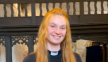
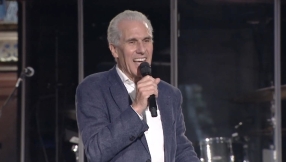
The Bishop of Rochester, the Right Reverend James Langstaff, yesterday gave a brief outline of the potentially historic Church of England women bishops proposals.
The final proposals are scheduled to be voted on by the General Synod on Wednesday, after having missed out on passage this time last year by a mere six votes in the House of Laity, the largest of the three Church of England legislative chambers.
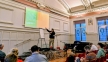
In his address, Bishop Langstaff said that his presentation was more of a means of an opening session to prepare for the small groups discussion on Tuesday. These groups would each contain at least one member of the House of Bishops, as well as one member of the steering committee that had put together the proposals.
Bishop Langstaff was particularly lauding in his praise of the committee. He commented on the fact that despite the inclusion of members from a diverse range and in some cases deeply opposed parts of the Church's doctrinal spectrum, an agreement was reached, and the members had been able to listen and engage with one another as fellow Christians, enjoying each other's company in the progress.
"We have met together, we have eaten together, we have sat in the bar of a long evening together," Bishop Langstaff had said "and perhaps most importantly, we have prayed together".
At one point in his speech, the bishop described the task set before the steering committee as "impossible… many of us had thought".
The goal was, he explained, rather than changing any one section's doctrinal position, instead to find a way to include those whose theological position could not countenance women bishops alongside those who would be very welcoming of such a move. The central plank of this compromise has been the creation of what the bishop referred to as a "mandatory grievance procedure" which allowed for parishes and diocese with concern about the leadership of a female bishop to register their concerns and seek oversight on a specific issue from a male figure of authority. This is the alternative to the two tier systems and so called "flying bishops" where female bishops would always have a male counterpart.
Although Bishop Langstaff was fulsome in his praise of the ability of the committee to come to a position so widely agreed upon (of the 15 steering committee members, 13 supported the motion while 2 abstained) he was also quick to warn the Synod that this agreement was very fragile.
"We do not have a plan B," was the phrase that emerged towards the end of his address.
This sentiment had already been expressed by the Right Reverend Johnathan Baker, representing the previously objecting Anglo Catholic block Forward in Faith. His group has expressed its support for the proposals on the table, on the proviso that none of the measures that have been put in place to meet their objections get significantly watered down or weakened. Bishop Langstaff did admit that aspects of the proposals could be improved, but overall he encouraged the Synod to avoid significant amounts of tinkering.
There is an air of confidence across the Synod that on this occasion the goal that was stated in 2000 will be reached. Specifically, as Bishop Langstaff put it "to remove the bar to the ordination of women to the episcopate in such a way that it is clear that the Church of England is fully and unequivocally committed to all orders of ministry being equally open to all without reference to gender – no ifs and buts".