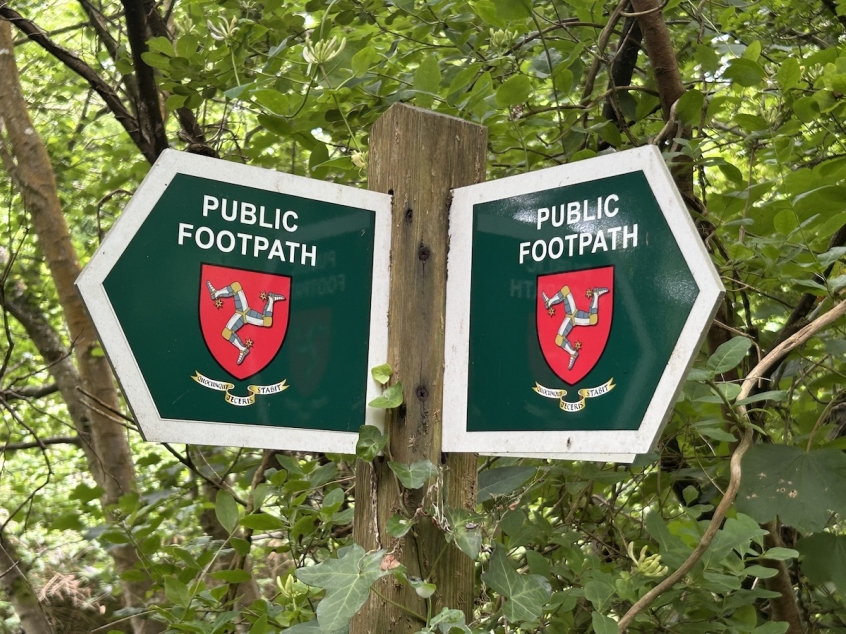
A new pilgrimage route has been launched on the Isle of Man, following in the footsteps of the men who translated the Bible into Manx. This is the story …
Manx Christianity
Christianity spread across the island through the work of St Maughold in the fifth century. He is the patron saint of the Isle of Man.
The Gospel spread and the Church developed on the island, but the people did not have the Bible in their own language for a thousand years.
The Manx language is similar to Irish and Scots Gaelic, but the languages have different orthographies, so they look quite different when written down.
The Manx Bible
With the coming of the Reformation, the Isle of Man became a diocese of the Church of England. Few people on the island spoke English, and ministers would translate the relevant parts of the Book of Common Prayer and the King James Bible into Manx on the fly.
In the eighteenth century, successive bishops oversaw the translation of the Bible into Manx by delegating different books to the Manx-speaking clergy on the island. The Gospel of Matthew was published in 1748, and other books were slowly translated until the New Testament, ‘Conaant Noa’ (New Covenant), was completed.
The whole Bible, ‘Yn Vible Casherick’ (The Holy Bible), was published as one book for the first time just over 250 years ago, in 1775.
The Translators
The names of the translators and the books they translated have been recorded, so it is possible to visit different parts of the island where different books were translated by the parish clergy.
The translation itself involved almost all the clergy of the Isle of Man, as well as one Episcopalian minister in Scotland who was originally from the island. Many of them had studied Latin and Greek, but knowledge of Hebrew was less common, so the translators probably had to rely on Greek and English versions for the Old Testament.
The Rev Phillip Moore (1705–1783), the chaplain of St Matthew’s, Douglas, and master of the grammar school there, was the chief editor, with his gifted student John Kelly making fair copies. A Manx woman, on first hearing her son read the Bible in her own tongue, cried, “Choud shoh ta shin er hoie ayns dorraghys!” (“Till now we have sat in darkness”).
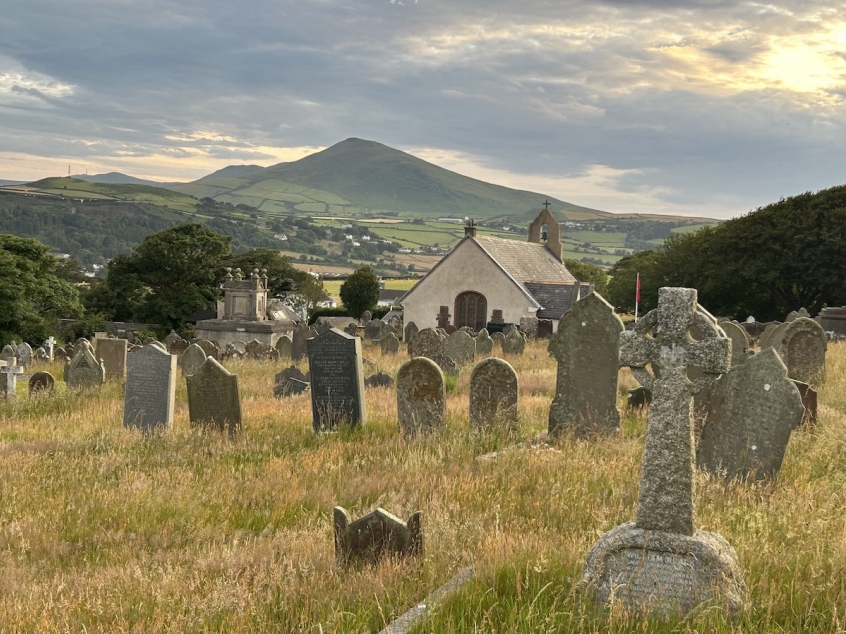
Manx Translators’ Trail
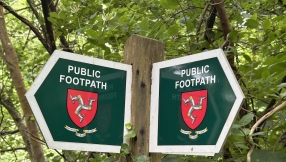
A Manx Translators’ Trail (Cassan Çhyndaaderyn y Vible) was launched as part of the Isle of Man’s Year of the Manx Language (Blein ny Gaelgey), and has been developed with the support of various agencies and churches on the island.
The route links 21 places where the Manx Bible was translated, including places where you can visit surviving memorials to some of the men who did the work. At each stop, there are suggested verses to read that were translated at those places.
The inaugural walk was held on Saturday 4 July 2026. It began at St Matthew’s Church in Douglas, at the memorial to Philip Moore, and ended at St John’s Methodist Chapel near Tynwald Hill. The Manx Translators’ Trail was then officially launched during Tynwald Day on the Isle of Man on 6 July.
Find out more
A beautiful Manx Translators’ Trail leaflet was produced by the Bible Society and is now available from tourist venues and churches on the Isle of Man, or by contacting the Bible Society.