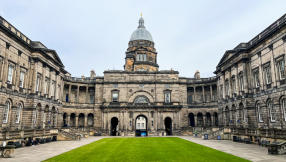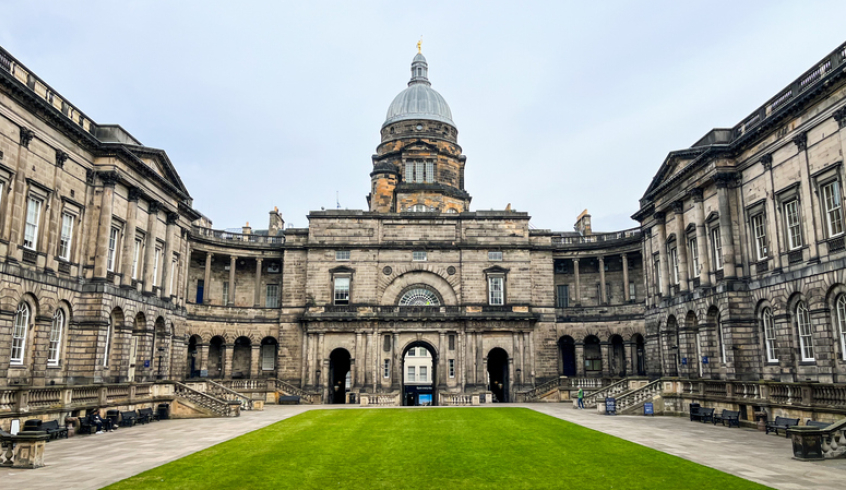
The University of Edinburgh is ending its Bachelor and Master of Divinity programmes, marking a significant change for an institution whose history has been closely intertwined with theological education for centuries.
The decision comes as universities across Britain face financial pressures, changing patterns of student demand, and a reassessment of how theology and religious studies should be taught. It also follows a major decision by the Church of Scotland to concentrate its national ministerial training at the University of Glasgow.
Edinburgh, founded in 1583, has a particularly deep connection with theological education. Its New College became an important centre for the training of ministers following the Scottish Reformation, making the ending of its traditional Divinity degrees a symbolic moment in the history of Scottish Christianity and higher education.
However, the changes do not amount to the disappearance of theology from the University.
The university says its School of Divinity is being reshaped rather than simply abandoned. Its existing academic provision in theology, religion, philosophy and ethics will continue, while new programmes are being developed for 2027 and 2028. The university says more than 200 new students joined the school this year from Scotland, elsewhere in the UK and around the world.
According to the university, the closure of the Bachelor of Divinity and Master of Divinity programmes is specifically linked to changes in ministerial training across Scotland and the Church of Scotland's decision to concentrate its training for national ministers in a single institution.
The wider restructuring at Edinburgh is substantial. The university has announced changes affecting 90 programmes within its College of Arts, Humanities and Social Sciences as part of measures intended to address a £140 million financial shortfall. The university has said that some programmes have declined in demand over many years, while other changes are designed to create a more coherent academic offering.
The Church of Scotland's decision is itself part of a longer process of reform rather than simply a response to Edinburgh's financial difficulties.
In May, the Church's General Assembly voted to appoint Trinity College at the University of Glasgow as its lead academic partner for training Ministers of Word and Sacrament and Deacons. A new Initial Ministerial Education programme is due to begin in September 2027, combining face-to-face teaching with online distance learning so that candidates across Scotland can train without necessarily relocating to Glasgow.
The Church has described the change as an attempt to create a more unified and coherent approach to ministerial formation. Its plans include a shared core curriculum, greater integration between academic study and practical ministry placements, and a stronger emphasis on spiritual and ministerial formation.
The move has historical resonance of its own. The University of Glasgow has trained ministers since 1560, and the Church of Scotland says around 40 per cent of its ministers over the past 50 years have studied there.
Rev Dr David Clarkson, speaking to the General Assembly, described the move as the culmination of a process stretching back 30 years.
He said the Church needed “clearer leadership, deeper integration and a more coherent framework” for ministerial training.
At the same time, he stressed that the issue was not about academic quality.
“The core issue is not academic quality, we value the input of all the providers, and we will still continue to work with those providers,” he said.
The Church's published plans indicate that other Scottish institutions will retain important roles. New College at Edinburgh, Christ College at Aberdeen and Highland Theological College will continue to provide certain forms of ministerial and public-access theological education, including distance learning.
The changes therefore raise a wider question about the place of formal theological education at a time when Christianity itself is changing.
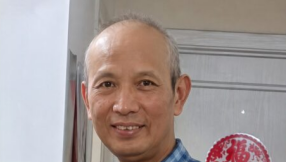
Dr Michael Tang, who studied theology at Birmingham University and completed a PhD examining the search for God in popular music, told Premier Christian News that declining university provision should not automatically be interpreted as declining interest in theology or Christianity.
He suggested that interest among younger people, including members of Generation Z who do not attend church, can increasingly be found outside traditional academic and ecclesiastical settings.
Tang described young people gathering in coffee shops during church hours to read the Bible together. His observation points towards a potentially important distinction between a decline in demand for particular university courses and a decline in people's interest in spiritual questions.
“Don't read it as a sign that theology doesn't matter ... it still matters,” he said.
He argued that universities may need to reconsider the purpose of teaching theology rather than treating it exclusively as an academic discipline. Young people can explore Christian spirituality and read the Bible communally without necessarily requiring a university qualification in theology.
Yet Tang's own experience illustrates the practical dilemma facing prospective theology students.
After completing his PhD, he spent a year unemployed and now works as a barista. His advice to those considering theological study is therefore cautious rather than dismissive.
“If people are very scholarly and want to become a theologian, of course going down the academic path is right for them,” he said. “But not everyone wants to become a theologian. So figuring out why you want to study theology in the first place is very important.”
That question may become increasingly important as traditional routes into Christian ministry and academic theology are redesigned.
The Church of Scotland currently has just under 80 people in its training process across its different ministerial pathways, according to information published during the lead-partner review. The Church's plans seek to connect academic study more closely with practical formation, mission and the realities of contemporary ministry.
The proposed curriculum includes Old and New Testament studies, worship, missiology, systematic theology, practical theology, sacramental theology and Scottish Church history.
The new model is also intended to allow candidates to pursue particular areas of ministry, including pioneering work, youth ministry, chaplaincy and academia.
That could represent a significant shift in the relationship between the classroom and the church.
For generations, theological education has often been associated with universities, seminaries and residential colleges. Increasingly, however, technology is making it possible to combine academic study with online learning, local ministry and community-based formation.
The Church of Scotland's own plans recognise this change. Its new programme will be delivered through a hybrid model, combining in-person teaching with online distance learning across Scotland.
Edinburgh is also emphasising that theology itself remains relevant.
In announcing its programme changes, the university said Theology and Religion would continue to “speak from a city shaped by Reformation and Enlightenment” to Scotland, Britain and the wider world.
It argues that theological and religious study continues to provide insight into questions of history, meaning, belief, values, culture and society, while helping students develop critical, ethical and interpretive skills.
That position is significant because the retreat from some traditional theological degrees is occurring at a time when questions about religion remain deeply embedded in public life.
Universities are increasingly required to justify courses according to student demand, employment prospects and financial sustainability. Yet theology has traditionally served purposes extending beyond straightforward vocational training. It has helped shape churches, communities, philosophy, literature, politics, education, art and the cultural history of nations.
The challenge now may be to find ways of preserving that intellectual and spiritual heritage while adapting theological education to a very different world.
Edinburgh's decision is therefore not simply a story about a university closing two degrees. It is part of a much larger debate about what theological education is for, who it is intended to serve and where it should take place.
The future may involve fewer traditional degree routes, but that does not necessarily mean fewer opportunities to explore Christian theology.
Indeed, the combination of university study, online education, local churches, community groups and independent Christian learning could eventually create a much more varied theological landscape.
For churches facing declining numbers of traditional candidates for ministry, the question is particularly pressing. Academic excellence remains important, but so too are formation, discipleship, practical ministry and the ability to communicate Christianity in a rapidly changing culture.
The Church of Scotland's new approach explicitly seeks to bring those elements together.
And perhaps that is the most important lesson from Edinburgh.
The future of theology may not be secured simply by preserving every historic course in its traditional form. Nor should the closure of a long-established programme automatically be interpreted as evidence that theology itself has become irrelevant.
Instead, the challenge may be to ensure that theological education continues to ask the questions that matter, while finding new places, technologies and communities in which those questions can be explored.
As Tang put it, theology still matters.
The question now is where, and how, the next generation will encounter it.