A landmark resolution introduced in Congress last week could mean that vital action is taken to defend Christians and other religious minorities in the Middle East, Christian Today has learned.
Speaking from Washington, executive director of A Demand for Action, Steve Oshana, said he hopes the resolution will be passed before the end of the year. He has worked closely with lead sponsors Congressmen Dave Trott and Brad Sherman, and believes that the legislation represents a "very strong effort on behalf of Christians in Iraq and Syria".
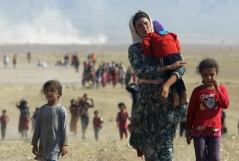
The bill, House Resolution 440, calls specifically for urgent international action on behalf of those facing "a dire humanitarian crisis and severe persecution because of their faith or ethnicity" in the region.
It demands that the US Administration provides humanitarian assistance to help re-establish the livelihoods of those displaced by the crisis, and that the US Permanent Representative to the UN work with the relevant agencies to document ongoing human rights abuses.
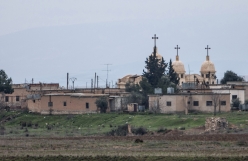
"Recent extremist attacks on civilians in Hassake, Syria, and the Ninevah Plains have exacerbated the serious dislocations and pressures facing individuals within this population of concern, and have had a particularly severe effect on ethnic and religious minority communities such as Assyrian/Chaldean/Syriac Christians, Armenians, Yezidis, Shabal and other minorities in the region, where civilians require immediate and urgent access to potable water, health care, fuel, electricity and basic security," the resolution states. It calls for sustainable solutions to these problems, and for UN agencies to coordinate with international humanitarian organisations to develop a long-term plan.
It also calls on the Department of State and the Department of Defense to support the training and equipping of vetted local Assyrian/Chaldean/Syriac Christians security forces, and to ensure that minority communities in Iraq and Syria are fully integrated into any future security forces.
This is very significant in a practical sense, Oshana said, because "these communities have no way to defend themselves".
For him, however, the most significant aspect of the resolution is the recognition of the Simele Massacre of 1933, when more than 3,000 Assyrians were killed in a northern Iraqi town. Until now, the massacre has not been formally recognised by Iraq or the US, so as the grandchild of survivors of genocide, Oshana says this clause has particular personal importance.
Those who survived the Simele massacre were relocated to the Khabor River valley in Syria, where ISIS now has a stronghold. They have therefore once again been forced to flee, Oshana said, creating a "pattern of persecution where the same people throughout the generations are suffering".
"The focus has to be on the people who can't defend themselves. The Kurdish people have weapons and militias, our people haven't, and so it's absolutely imperative that the focus of the world be on the people who are suffering the most; those who have suffered persecution throughout history. We have a duty to help them," he said.
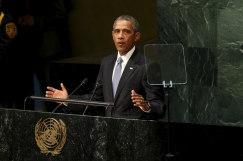
The language contained in the resolution is "really unlike anything we've seen in Congress before," Oshana added, and coupled with Obama's condemnation of ISIS yesterday – branding the militants an "apocalyptic cult" – he believes it to be a sign of a stronger rhetoric from the US government.
"When it comes to our global leaders, their words matter, and the words of the President of the US are probably the most impactful in the world," he said.
"So when the President is using that kind of language, it sets the tone globally as to how people talk about and deal with the issue. The fact that we've seen the language get stronger gives me hope that the US is going to get more serious about combating this threat to the world. Not that it hasn't been serious so far, but the response has been very measured, and there needs to be a more aggressive response both in word and in deed."