Every time I hear the first few bars of 'Where the Streets have no name' by U2, I am transported back to a flat we lived in in Tirana, Albania. I often listened to The Edge's cyclical guitar riff on cassette during our years in that drafty but homely apartment on a street that literally had no name.
Similarly whenever I hear the strumming of the mandolin on REM's Losing My Religion, I cannot help remembering a conversation in my student dorm with a friend who had decided to give up their Christian faith. And I can't listen to Time To Say Goodbye by Katherine Jenkins without tearing up as I am reminded of the slide show from my mother's funeral.
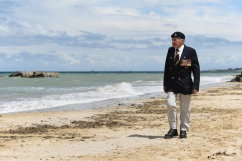
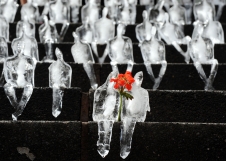
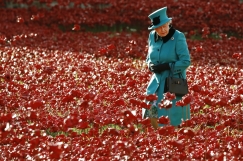
Music and memory are intimately connected. We hear a song on the radio or in a shop and it reminds us instantly of our schooldays, or a specific job or person, or a romance or difficulty we experienced. The bugle music of the Last Post also powerfully transports us to memories of the tragedy of war. But it is interesting that we also choose to commemorate those that were killed fighting for their countries through two minutes of silence. Silence provokes our memory to mark the absence of loved ones, to reflect on the human cost of war and to remember that liberty and freedom from tyranny did not come cheaply.
Christians are divided about whether we should observe Remembrance Day. Some are fearful that it encourages an unhealthy nationalism when citizenship of God's Kingdom overrides arbitrary lines on a map. Some find it hard to celebrate military victories when we worship a God who wants to beat swords into ploughshares, a Saviour who refused to fight his way out of trouble and indeed healed the enemies that had come to arrest him, a God and who allowed himself to be killed by soldiers of an imperial power. Other Christians argue that it would be wrong not to recognise that our religious and political liberty was won for us by young women and men who were willing to risk their lives for ours. They would argue that sometimes war is the lesser of two evils and can be a necessary act of love to protect the vulnerable. Still others choose to observe Remembrance Day to honour the conscientious objectors, peacemakers and innocent victims of war.
Wherever we stand on this issue, when we stand in silence to either grieve the brokenness of our war-torn world or to give thanks for the bravery of those that lost life and limb for liberty - we remember. We remember people. We remember the powerful images from historical documentaries, movies or current news. We remember God's promises that one day there will be no more war.
On this the centennial year marking the beginning of World War One perhaps the nation's act of remembrance takes on special significance. Two of my friends have decided to remember the past not through silence but through music. One manages a band that has released a pop song to raise funds for Help for Heroes. His logic is that if we are going to honour those that have died we should also remember those that have to live on carrying the wounds they bore in conflict. You can hear a sample of the track here.
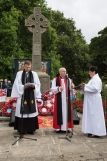
The other, Calum Carswell, a student at The London School of Theology where I work, has written a full requiem for St Paul's in Jewellery Quarter, Birmingham to be used as part of their Remembrance Day Service this year. Find out more details here.
Whatever your musical taste, and whatever your stance on Remembrance Day, perhaps these two pieces of music will help you to remember well and help you pray and work for peace.
Perhaps they will help you remember well. Perhaps they will help us pray and work for peace and reconciliation in our broken world. Perhaps you will be reminded of the echo of another song, an ancient one that is about to be heard again during Advent, the one the Angels sang "peace on earth and goodwill to all men".
Dr Krish Kandiah is founding director of the charity Home for Good and President of London School of Theology.