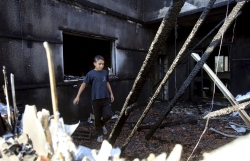
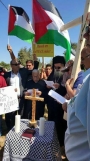
Israeli police have used stun grenades and tear gas against rock-throwing Palestinians who have barricaded themselves inside Jerusalem's al-Aqsa mosque for the last three days. The stand-off has led to rising international tensions. The White House has called on all sides to "exercise restraint and refrain from provocative actions and rhetoric", while King Abdullah of Jordan said the Israeli actions were provocative and could imperil ties between the countries.
What's so special about the al-Aqsa mosque?
The mosque is situated on Temple Mount, also known as the Haram al-Sharif, a site sacred to Jews and Muslims. In Jewish tradition it is the place where God gathered the dust to form Adam. It is also believed to be the place where Abraham bound Isaac for sacrifice and where Solomon's and Herod's temples were situated. Many pious Jews will not walk on it for fear of accidentally trespassing on the Holy of Holies. For Muslims it's the third holiest site in the world, the location of Muhammed's ascent to heaven. There are three ancient Muslim structures there: the Dome of the Rock, the Dome of the Chain and the al-Aqsa mosque, orginally built in 705 AD.
Who runs the area now?
Israel captured the Old City of Jerusalem and the Temple Mount area in the Six-Day War in 1967. It soon became a nationalist and religious flashpoint, with the chief rabbi of the Israeli Defence Force, Shlomo Goren, bringing a shofar and portable altar into the area. Under the terms of the Israel-Jordan Peace treaty, the Mount remains under Jordanian custodianship. Israeli Jews may enter the compound but cannot pray or conduct religious ceremonies there.
How's it working out?
There are periodic flare-ups as Jewish Israeli extremists try to encroach on the area. In 1990 there was an attempt to lay the cornerstone of a new Temple which led to riots in which Israeli forces killed 21 people. The second Palestinian Intifada or uprising began in September 2000 when opposition leader Ariel Sharon toured the site with a delegation from his Likud party and a squad of riot police in what was seen as a deliberate provocation. An attempt to let Jews pray in small groups on the Mount was defeated when a group was attacked and stoned. The libertarian argument is that people should be free to pray anywhere they like. In practice some Muslims see Jewish attempts to pray on the Temple Mount as an assault on their religious and cultural identity.
And the latest outbreak?
The number of visits by Jewish groups has been increasing, fuelling Palestinians' fear that Muslim religious control is being eroded. Jewish ultra-nationalists have been pushing the Israeli government to allow Jewish prayer on the compound outside al-Aqsa. Twenty members of the Likud Youth organisation visited the Temple Mount this week in spite of pressure from Prime Minister Benjamin Netanyahu to cancel the visit. Half were religious, half were not.
Are the rules going to change?
Netanyahu says not. He claims to be in favour of the status quo and says he is anxious to damp down the tension. However, he and his government are not trusted by Palestinians. Suggestions that the rules are to be changed find ready listeners and easily lead to protests which can turn violent.
And in a perfect world...?
There'd be room for all. However, the Temple Mount area has become a symbol of nationalism and cultural identity. Many Jews resent not being able to pray in such a special place, but many others see asserting control over the area as part of their claim to the whole of Jerusalem – it's the same mindset as the illegal settlers who build on Palestinian land. But many Muslims resist these claims for similar reasons: it's not so much the prayers as what they stand for. It's part of the much wider Israel-Palestine question for which no one yet has an answer.
Follow @RevMarkWoods on Twitter.