Israel Boycott gains traction as EU demands settlement products are labelled

Boycotting Israeli products produced in illegal settlements will soon be easier following new guidelines issued today by the European Commission.

Agricultural and cosmetic products sold in EU member states must be explicity labelled if they come from settlements built on occupied territories, according to the Commission's new guidelines. The measures, decided this afternoon, adopt an "interpretative notice on indication of origin of goods from the territories occupied by Israel since June 1967."

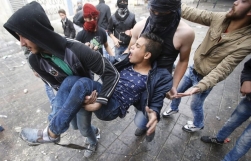
The decision comes as tensions are high in Israel-Palestine after a wave of attacks on Israelis. More than 70 Palestinians and 12 Israelis have died in the violence which is in part fuelled by the growth of settlements.

Along with many western nations, the EU's position is that the lands Israel has occupied since the 1967 Middle East war – including the West Bank, East Jerusalem and the Golan Heights – are not part of the internationally recognised borders of Israel.

As such, goods from there cannot be labeled "Made in Israel" and should be labeled as coming from settlements, which the EU considers illegal under international law.

"It's an indication of origin, not a warning label," the EU ambassador to Israel, Lars Faaborg-Andersen, told Reuters.

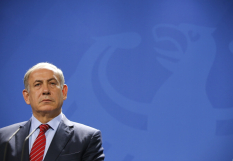
However Israeli Prmie Minister Netanyahu was quick to denounce the decision as "hypocritical and a double standard."

"The European Union should be ashamed of itself," he said. "We do not accept the fact that Europe is labeling the side being attacked by terrorist acts."

Israel's foreign ministry supported Netanyahu's statement and said the move singled Israel out and was potentially harmful to long-standing peace efforts.

"We regret that the EU has chosen, for political reasons, to take such an exceptional and discriminatory step, inspired by the boycott movement," it said in a statement.

"Product labeling will strengthen the radical elements advocating a boycott against Israel and denying Israel's right to exist, contradicting positions the EU publicly opposes."

Israel's fury is partly because it sees the new guidelines as overly aggressive towards Israel directly and points out the EU does not treat other cases of long-standing occupation, such as Morocco's seizure of Western Sahara in the same way.

Israel's Economy Ministry estimates the impact of Wednesday's decision will be about $50 million a year, affecting fresh produce such as grapes and dates, wine, poultry, honey, olive oil and cosmetics made from Dead Sea minerals.

That is around a fifth of the $200-$300 million worth of goods produced in settlements each year, but a drop in the ocean next to the $30 billion of goods and services traded between Israel and the European Union each year.

Britain, Belgium and Denmark already affix labels to Israeli goods, differentiating between those from Israel proper and those, particularly fruits and vegetables, that come from the Jordan Valley in the occupied West Bank. Now, all 28 EU member states would have to apply the same labeling.

Additional reporting from Reuters. 

related articles
Netanyahu\'s Holocaust claims: Why they don\'t stand up
Netanyahu's Holocaust claims: Why they don't stand up

Israel's President Benjamin Netanyahu sparked controversy yesterday by a speech in which he blamed the Holocaust on a Palestinian.

US announces deal to tackle Israeli-Palestinian violence in Jerusalem

The United States on Saturday proposed steps, including 24-hour video surveillance, to end weeks of violence over a Jerusalem site holy to Muslims and Jews.

Academic boycott of Israel: Another front in human rights battle

Academics say they will not visit Israel's universities, act as academic referees or participate in conferences organised by them.

What if Rabin hadn\'t been shot? And other questions...
What if Rabin hadn't been shot? And other questions...

Is asking 'what if?' a waste of time or can it help us to work for a better future?

Palestinian shot dead by Israeli forces in the West Bank

Israeli forces shot dead a Palestinian in the occupied West Bank on Thursday after he ignored calls to halt and attempted to attack one of the soldiers at a crowded bus stop, the military said.

Netanyahu: I remain committed to a two-state solution

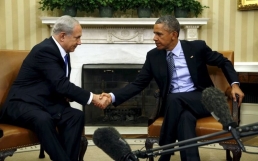
Israeli Prime Minister Benjamin Netanyahu assured U.S. President Barack Obama on Monday that he remained committed to a two-state solution to the Israeli-Palestinian conflict as they sought to mend ties strained by acrimony over Middle East diplomacy and Iran.

News
Campaign aims to mobilise 500,000 Christians for Christmas outreach

Shine Your Light is aiming to mobilise half a million Christians to share the gospel with five million people across the UK this Christmas, with more than 2,000 churches already signed up, organisers say.

The Church of England should repent for previous calls to ban 'conversion therapy'

The Church of England's uneasiness about the government's ‘conversion practices’ bill is a perfect lesson in the old adage, 'be careful what you wish for,' writes Dr Martin Davie.

Leaked Home Office report links 'Christian extremism' to traditionalist beliefs and immigration concerns

An internal Home Office report lists concerns about immigration, multiculturalism and changing social values among the characteristics associated with what it calls "Christian extremism", it has been reported.

Tearfund calls for COP31 funding to reach farmers struggling with climate change and food insecurity

Tearfund warns that worsening climate conditions are threatening food production and pushing more people towards hunger.