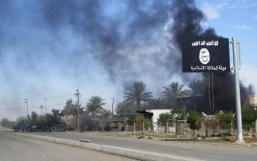
News broke on Wednesday that ISIS militants in Iraq have destroyed another ancient temple; that of Nabu in the Assyrian city of Nimrud.
"Compared to imagery collected 12 January 2016, we observe extensive damage to the main entrance of what is known as Nabu Temple," UNITAR, the UN Training and Research Agency, said.
It released two satellite images taken on June 3, confirming claims made in an ISIS propaganda video earlier this week that the 2,800-year-old temple had been blown up.
Extensive damage to main entrance of Nabu Temple #Nimrud #Iraq as of 3 June sat img @DigitalGlobe @UNESCO @UNITAR pic.twitter.com/1ENBPRSPYY
— UNOSAT (@UNOSAT) June 8, 2016
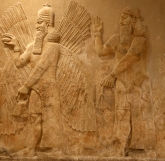
Nimrud was looted and large swathes of it bulldozed in March last year. The city dates back to the Middle Assyrian period and was considered to be one of the most important cities in the Assyrian empire. Located 30km south of Mosul in the Nineveh plain, which was overrun by ISIS militants in June 2014 and is now a stronghold of the Islamist group, it was established as the capital during the Neo Assyrian period under King Ashurnasirpal II. Many of the carvings from his palace in the city are now on display at the British Museum in London.
Nimrud was until last year one of the most preserved sites in the region, though subject to some neglect and looting in the past two decades. It has been nominated for inclusion in the UNESCO World Heritage list, and Director General Irina Bokova condemned the 2015 attack. He said in a statement at the time: "We cannot remain silent. The deliberate destruction of cultural heritage constitutes a war crime."
Looting and bulldozing ancient sites has become one of the hallmarks of ISIS's devastating attempt to create its caliphate, but it's not mindless pillaging. It's not even simply an attempt to demonstrate military strength or power. In fact, experts believe it's part of the group's ongoing attempt to cleanse the Middle East of its religious and cultural heritage; a reality that is far more disturbing.
Dr Nicholas Al-Jeloo, a lecturer in Syriac at the University of Melbourne, told Christian Today he was devastated by the Nabu temple's destruction. His parents and siblings were born in Iraq, and he grew up looking at photos of Nineveh, hoping one day to visit himself. "And now I can't; it's been destroyed forever," he said. "Once these sites have been lost they can never be rebuilt. You can build replicas from photos, but it will never be the same."
He branded the destruction "a travesty in all respects... because this was people's tangible link to their ancestral heritage. When you destroy that, you not only destroy any kind of cultural ties or memories these people had, but also their right to return or their will to return. What will they return to?"
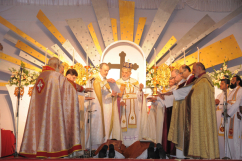
An ancient branch of Christianity, the Assyrian Church of the East has roots dating back to the 1st century AD. Assyrian Christians speak Aramaic, the language of Jesus, and have origins in ancient Mesopotamia – a territory which is now spread over modern day northern Iraq, north-east Syria and south-eastern Turkey. Connection with the land of their ancestors is incredibly important to modern day Assyrians, and it is this that is being severed by ISIS's campaign.
Hundreds of thousands of Iraqi Assyrians have been displaced by the conflict, and just 300,000 are believed to remain in the country. "If there is nothing on the ground which they can identify with as belonging to their culture, what will they return to?" Al-Jeloo asked.
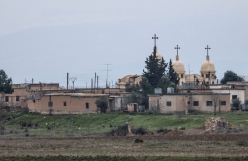
"If all their churches and the ancient sites belonging to their ancestors have been destroyed, then for these people the land no longer bears their identity, and this is a very profound thing. People might say it's the world's heritage that is being destroyed, and that's true, but it's also the heritage of the locality and the people who identify with it and with having lived there for thousands of years. This is, in fact, contributing to the genocide against the Assyrians."
Both the European Parliament and the US administration has recognised ISIS's mass slaughter and persecution of religious minorities in the Middle East, including Assyrian Christians and Yazidis, as genocide. British MPs voted unanimously in favour of a similar motion in April but it is yet to be agreed by the Conservative government, which maintains an official designation of 'genocide' is a matter for the International Criminal Court.
Al-Jeloo said the attempted eradication of entire people groups and their heritage is part of ISIS's plan to destroy "any pre-Islamic vestiges that are left [in the Middle East], for people to not have something to identify with that is pre-Islam".
The destruction of ancient sites like the Temple of Nabu, therefore, is part of an Islamist agenda to wipe out anything deemed to pose a threat to their radical interpretation of Sunni Islam. Indeed, in the video released by ISIS this week, a militant said the group wanted to prevent Muslims from returning to idolatry.
"The world has a responsibility, not only to the Iraqi people, but to the Yazidis and the Assyrians in particular. These are two vulnerable groups in danger of becoming extinct, both culturally and in reality, and the world has a responsibility to protect them, and ensure their culture is maintained for the future," Al-Jaloo said.
"The fact that the majority of the world has remained silent while this is happening is unacceptable."