The "triangular trade" that saw slaves ships from Liverpool transport slaves from West Africa to the Americas has inspired an initiative to link three very different Anglican dioceses.
In the 18th century the "triangular trade" between England, West Africa and America led to unimaginable suffering. Ships laden with guns, cloth, brandy and trinkets sailed from Liverpool to West Africa. They exchanged these trade goods for slaves, captured by highly organised raiding parties. On the long voyage to the West Indies hundreds would die of disease and be thrown overboard. The third leg, from the Americas back to England, saw the ships loaded with tobacco, sugar, rice and cotton. The trade made everyone rich – except the slaves.
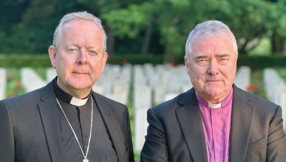
Now Rt Rev Paul Bayes, Bishop of Liverpool, has restarted a project begun by his predecessor James Jones to create a "triangle of hope".
His Liverpool diocese is joining the Diocese of Kumasi in Ghana, where slaves were sold in a huge market, and the Diocese of Virginia, where they were sold and worked as field hands in tobacco and cotton fields, in a project aimed at teaching people about their shared history and building relationships for the future.
Bayes told Christian Today the three bishops were "exploring and praying and hoping we can reconstitute the triangle with Virginia, Liverpool and Kumasi dioceses".
"In each one of those the slave trade left its scars," he said. In Virginia, some of the early clergy were slave owners, while in Liverpool, some churches were built with slave money.
He said: "There's a lot in our history, and a desire to reconstitute the triangle of hope in an Anglican communion – and it's the same for other Churches – where the tensions of colonialism and post-colonialism are just echoing around."
Bayes added: "In Liverpool I think we haven't really got to grips with the fact that the money from 40 per cent of the slave trade flowed through our city."
However, he said: "The purpose of the triangle is not just to dwell on that but to move on from it. We're hoping to use the history as a resource and to come to terms with it, explicitly in Liverpool to come to terms with our own need for diversity, but also to say, 'Now here we are, three quite different parts of the world; what can we learn now from one another and how can we make it a genuinely hopeful triangle?'"
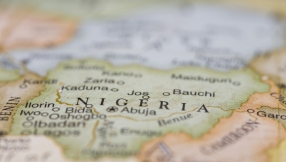
The previous three-way relationship including the Virginia diocese and the Akure diocese in Nigeria fractured over the issue of same-sex marriage.