A traditionalist diocese in the Church of England has defended its actions in exposing a long-dead and highly respected bishop as a paedophile.
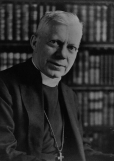
The Diocese of Chichester says in a document on its website that there is no doubt that Bishop George Bell achieved many great things during his lifetime, for which he is rightly honoured and should continue to be remembered.
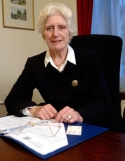
"But any suggestion that those who have done good deeds should be afforded an extra degree of protection from serious allegations cannot be upheld," writes diocesan secretary Gabrielle Higgins. "This is fundamentally wrong."
She argues that it is this position that has led many institutions, including the Church, to respond to allegations of sexual abuse so poorly in the past. "We cannot – and will not – allow this to continue in the 21st century. All allegations of abuse must be taken seriously and dealt with sensitively and professionally; we must never demand a higher threshold of suspicion because the accused person is of high standing, or has an 'impeccable' reputation, however uncomfortable this may make us feel."
The diocese has been publicly criticised for its revelations about a bishop who was widely revered and regarded as incorruptibly holy, without revealing the evidence of the crimes he was alleged to have committed or allowing a defence to be mounted.
In an article headlined "The Church, the police and the unholy destruction of Bishop Bell", respected commentator Charles Moore in The Daily Telegraph wrote that Pastor Dietrich Bonhoeffer, the German theologian and anti-Nazi, who was executed in a concentration camp, regarded Bishop Bell as the greatest friend of the German Christian resistance to Hitler.
Moore criticised the way the affair was handled, 57 years after his death, with no witnesses in his defence. "There are no published records of the process which condemned him. The decision was made by the 'core group' of 'safeguarding professionals' and the bishops of the diocese, under the Church of England's National Safeguarding Team." Moore added: "If Bishop Bell had been a Nazi war criminal, the charges against him would have had to reach a far higher standard of proof than those by which the Church of England has destroyed him."
In its note of explanation, the diocese concedes that Bishop Bell had a long and distinguished ministry as bishop of Chichester from 1929 until his death in 1958. There was widespread shock when in October last year, the Church of England announced that the Bishop of Chichester, Martin Warner, had issued a formal apology following the settlement of a civil claim regarding sexual abuse against Bishop Bell.
Given the nature of the allegations and the reputation of Bishop Bell, it was understandable that questions were raised, the diocese admits.
But while in criminal cases, innocence is presumed until guilt is proved and the burden of proof rests entirely on the prosecution, the case of Bishop Bell was a civil and not a criminal case.
"Bishop Bell has not been denied the 'presumption of innocence', because proceedings were never brought before a criminal court," writes Higgins. "This may seem like a technical point, but it is important that this fundamental legal principle is understood."
The death of the person does not mean allegations should not or cannot be investigated, it only means that a criminal prosecution cannot be pursued.
About the failure to disclose the evidence, she explained that the desire for transparency does not sit easily with the requirement for confidentiality and praised "the courage displayed by any survivor in coming forward".
She adds: "The law rightly affords them protection to safeguard the confidentiality of their deeply personal information."
While sympathising with those struggling to come to terms with the revelations, "this cannot outweigh the individual's right of privacy."
And even if the Church wanted to release the evidence, legally it is forbidden from doing so.
The document was also posted on the Law and Religion site, where one reader commented: "An excellent and concise response that every diocese should share with their safeguarding and senior staff to enable them to respond with clarity to questions raised generally in safeguarding."
Meanwhile, the Bishop Bell Church of England School is considering changing its name in the process of becoming an academy.
The governing body is in the process of deciding whether the school should become St Catherine's College or St Edward's College.
Mark Talbot, head teacher, said the name change was directly related to the news about Bishop Bell. He said St Cahterine was recognised for being honest and standing up for what she believed to be right. She was charitable, demanded nothing for herself, was a peacemaker and was respected for her spiritual writings. St Edward was an English King who founded a monastery. He was a man of great prayer and hailed throughout his life as a gentle, learned and devoted king. He built the Norman abbey that replaced the original Saxon church at Westminster.