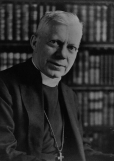
The victim of paedophile Church of England bishop George Bell has spoken for the first time of how the revered ecclesiastical figure abused her regularly from when she was just five years old.
The anonymous victim described to The Argus how Bell, dressed all in black, would wait for her on the stairs. He would abuse her while reading to her and telling her that God loved her, she said.
The Church of England's decision to apologise and pay out damages has been criticised by some because the former Bishop of Chichester is long dead and has had no chance to defend his reputation. Schools and other institutions that were named after him have been rechristened. The diocese of Chichester recently issued a lengthy statement justifying its approach to the scandal, saying he should not be protected just because of his "good deeds".
The victim said she had decided to speak out because of the commentators who had stood up for the bishop, who served as Bishop of Chichester from 1929 through the Second World War until he died in 1958. He built a reputation as an outspoken opponent of the Nazi regime and of any policy of appeasement.
She wrote previous letters but her case was only acted on after she wrote in 2013 to the present Archbishop of Canterbury Justin Welby. She finally received an out-of-court settlement of £15,000 and an apology, in which Bishop of Chichester Martin Warner said he recognised that waiting two years since her complaint to Archbishop Welby must have been difficult. "At times you may have felt that people in the Church were hoping that you would go away. Please accept my reassurance that this has not been the case; there were many steps that needed to be taken in order to be able to respond as we have now done."
She told the Argus that Bishop Bell abused her for a period of four years, at the same time as reading her a story, while she was at the palace in Chichester. She was taken there by a relative of her mother's who worked there.
"My strongest memory is seeing this figure all in black, standing on a stair, waiting. He used to wear a black tunic thing that came down to his knees and long black leggings, that's what I can remember. They might have been trousers. They looked like leggings to me," she said.
"If you go into the Bishop's kitchen there's a wooden stair that comes down and he used to wait on there, half way down it. And then he'd go, 'Oh Elsie, I'll take Carol [not her real name] and read her a story.' He used to take me off down this long corridor and there was a big room at the end and he used to take me in there. There were books all around the room. And then he'd shut the door."
She did tell her relative at the time but the reply came back: "Shhh, you don't say that, that's not nice, don't tell fibs'. Back in them days everything was swept under the carpet."
Chidlren were taught to do as they were told, she added: "So 'you go with the bishop' and you just trotted off, especially once you've mentioned it once and been told not to tell lies."
The bishop also told her not to tell anyone. "He said it was our little secret, because God loved me."
Although she subsequenty married and raised a family, she made clear in the interview that the abuse has haunted her ever since.
Bishop Warner said today: "It is testimony to her courage and integrity that the survivor who brought the allegations against George Bell has been prompted to speak out. My hope is that the telling of her story will contribute to her sense of being heard by those within and beyond the Church who are willing to listen with an open mind and respond with compassion and clarity.
"The presence of strident voices in the public arena which have sought to undermine the survivor's claims has added in this case to the suffering of the survivor and her family. To that extent it is not surprising that she felt it necessary to take the courageous decision to speak out in public and reveal the personal details which the Church could not.
"Words of apology written in a letter can never be enough to express the Church's shame or our recognition of damage done. However, the apology that I made on behalf of the Diocese of Chichester is genuine and a sincere expression that lessons are being learnt about how we respond to accusations of abuse.
"In some responses to the George Bell case, and to the original statements from the Church nationally and locally in the diocese of Chichester, we have witnessed shocking ignorance of the suffering felt at many different levels by victims of abuse."