A new survey by the Evangelical Alliance shows that 78 per cent of evangelicals believe that the last government's policies hurt the poor. That's a pretty damning statistic, as I am pretty sure that more than 22 per cent of evangelicals voted for the new government. For me this means that either caring for the poor did not effect our vote or that the other parties were seen to be offering even less help for the poor. Did our theology affect our vote?
As the Chancellor plans a further £12 billion of welfare cuts, it is worth taking a step back to consider the logic behind this. Best-selling author and columnist Owen Jones lays down a stark challenge to the solutions being proposed to the current deficit:
"Ever since Britain was plunged into economic disaster in September 2008, there has been a concerted attempt to redirect people's anger – both over their own plight, and that of the nation as a whole – away from the powerful. Instead, the British public are routinely encouraged to direct their frustrations at other, often more visible, targets, who have long been vilified by elite politicians and the media alike: immigrants, unemployed people, benefit claimants, public-sector workers, and so on."
This logic seems to be working itself out with the current round of cuts to welfare, while seeing less taxation on the rich. The Trussell Trust have already reported their millionth foodbank user and yet the poor are going to be hit again with further cuts. This really feels like kicking a man while he's down. The global economic crisis was not caused by the poor but by the rich and yet it is the poor that are being asked to bear the brunt of the pain.
I am conflicted by the figures from the Evangelical Alliance. I am delighted that 97 per cent of evangelicals believe that we should work for justice for the poor. That is a hugely gratifying statistic, especially as I still come across so many Christians who tell me that evangelism should be the sole priority for believers. This statistic means that those that hold these views are a small minority and don't represent mainstream evangelicalism. But yet I find it staggering that we ended up with the government we did if these views are so widely held by evangelicalism.
So I would like to propose five practical steps of how we can live out our beliefs and care for the poor.
1. Refuse to blame the poor for our economic problems
We need to continue to challenge the prevailing narrative that the poor are to blame for the financial problems we are facing. We must push back against the vilification and demonization of the poor. Governments are only able to operate within the political space we give them – we need to destroy the credibility in the story that we can save our nation by making the 'underserving poor' pay for their mistakes.
2. Give yourself, not just your tins
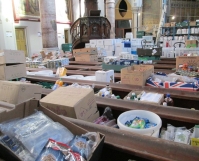
Supporting your local foodbank is an important way the church can help those that are trapped in food poverty. It is heartening that 70 per cent of evangelicals have donated to a foodbank in the last year and that nearly four in 10 are also volunteering for a local Christian project tackling poverty. The sad thing was to read was that only one in 10 have shared a meal in their home with someone who was hungry, destitute or homeless. If we're not careful, our engagement with poverty can become tokenistic. We give a few tins and volunteer a bit of our leisure time but the needs of the poor still aren't really a priority for us.
3. Open your home
You might expect this from me, but an important way of tackling poverty is to help raise children in care in loving homes. With over 62,000 children in the care system there is a desperate need for more carers who will welcome children from the most desperate situations into their homes and give them the love and care that they need. If these children do not receive that love they sadly often end up in social and financial difficulty when they leave care. (You can read more about this issue here.)
4. Glean
Old Testament law made provision for those who were without land and therefore without a means to provide for their families. The principle of gleaning meant that farmers were encouraged to be deliberately less efficient in their harvesting to make sure that there would be enough for the poor to come and harvest food for themselves in their fields. This principle meant that the poor were not going to be simply receivers of charity but could know the dignity of work and providing for their dependents. In your business life what opportunities do you have to help make decisions that will allow the poor the dignity of work? A contemporary example would be Timpson shoe repair shops that have had a deliberate policy of helping to rehabilitate ex-offenders through training and job opportunities.
5. Pray
The cuts that are coming are going to bring financial disaster to many families across the UK. Let's plead the case of the poor to government but also in front of the King of Kings.
Krish Kandiah is a contributing editor to Christian Today. He is president of London School of Theology and founder and director of Home for Good. You can follow him on Twitter: @krishk