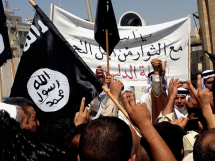
How do you defeat an ideology? This is not a new question. World leaders have asked themselves the same thing about Nazism, the IRA, Al Qaeda, Boko Haram and countless others. The challenges posed by jihadist group Islamic State are huge and complicated and the question of IS is rightly dominating the world stage.
When faced with such a question, world leaders understandably hope to act proportionally and with wisdom. President Obama himself said that responding to Islamic State requires a range of measures, including supporting and empowering the Iraqi government, offering humanitarian assistance and working to counter the group's warped ideology.
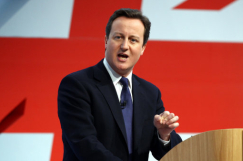
Yet, if we're honest, military action was always going to be a significant part of the picture - whether as low-level as arming and reinforcing the Iraqi army, or as direct as the air strikes now underway in Syria. Over the next few days David Cameron is expected to announce increased UK military intervention in the battle against IS and yesterday, US military spokesman Rear Admiral John Kirby said that while US-led air strikes in Syria have disrupted the group's capabilities, ultimately this fight will take many years. This is the language that is being used: fight, battle, defeat, destroy, eliminate. No one has yet used the phrase 'war on terror' but the rhetoric is very similar.
Military action is never an easy option, but it does offer us the illusion of having found an answer to the problem, a way of fixing this thing called terrorism, a chance of wiping out the threat. And perhaps we could be confident in this solution if we were fighting machines, but Islamic State is a human thing - a set of beliefs and prejudices and ideals that can spread from one person to another like a virus. We must be honest about this: you can't bomb an ideology out of existence. To allow ourselves to believe that you can is nothing more an abandonment of our responsibility to seek genuine, difficult and long-term solutions.
Church leaders have today highlighted some of the unanswered questions that the call for military intervention leaves hanging in the air: What is the level of commitment among countries in the region to prevent the funding of violent extremism? What role can the international community play in documenting human rights abuses? How might some of the grievances that have provided support to the rise of IS be addressed?
Christians believe that we are all called to be peacemakers, but few of us realise what a dirty and difficult vocation this is. I agree with Kirby that nations must be willing to invest years in this process, but not just years of bombs, drones, tanks or troops. Military action may be a necessary part of our response to IS, but if we genuinely hope for real and lasting peace we must also be prepared to play our part in answering those tough questions.
St Paul didn't say very much about conflict resolution on the grand scale - he had plenty on his plate dealing with fractured church communities - but he did offer one principle that I think should guide our responses in the face of such evil: be angry, but do not sin (Ephesians 4:26). We are right to be angry about the actions of Islamic State. We should be furious about the persecution of religious and ethnic minorities, about the murders of James Foley, Stephen Sotloff and David Haines. But anger is not a strategy for peacemaking and neither is military action alone. Anything less than the commitment to a genuine search for peace in Iraq, Syria and beyond is sinful - a failure of our calling as peacemakers.
Anna Drew is an Anglican working for the Methodist Church in Britain as lead media officer.