
A court in Greece has overturned the country’s first “homosexual weddings”, which took place last year as a result of a legal loophole.
Greek civil law does not specify the gender of a couple who intend to get married. As a result a gay and a lesbian couple tried to get married last year on the island of Tilos, despite warnings of criminal charges from officials.
However a public prosecutor from the island of Rhodes took the case to court and argued that neither the constitution nor the law refers to same-sex marriage. The prosecutor asked the court to cancel the weddings.
Vassilis Hirdaris, the defendant's lawyer said, “The court said the weddings were invalid … We will appeal within May ... but I fear the appeal court's decision won't be different, considering how conservative Greek courts are."
Hirdaris added that the couples wanted to take the case to the European Court of Human Rights if their appeal was unsuccessful.
The “marriages” were strongly criticised by the Orthodox Church in Greece, which performs around 90 per cent of weddings in Greece. The Greek Justice ministry also declared the “weddings” illegal.




-

More than one in four US Protestant churchgoers believe some biblical truths become outdated
-

Wycliffe celebrates ‘remarkable moment’ as Bible translation advances at rapid pace
-

Could the Church face a ‘silver uprising’?
-

Christian leaders issue ‘sober and urgent call’ for Western Church to prepare for disruption
-

Church in Wales pauses plans to allow gay marriage
-

Christian social worker returns to Court of Appeal in dispute over withdrawn job offer
Most Popular
related articles
France to recognise foreign civil partnerships
France to recognise foreign civil partnerships
News

Majority back Ireland’s three-day abortion waiting period, poll finds
A new poll has found majority support for retaining Ireland’s mandatory three-day waiting period before an abortion, as lawmakers continue to consider legislation that would remove the requirement.

ONS figures show 'good' outlook for married couples
The Coalition for Marriage (CFM) has welcomed new figures suggesting that married couples are increasingly staying together.
Christians condemn sexual violence following UN report on Russia-Ukraine conflict
Most cases of sexual violence documented were against male prisoners of war.
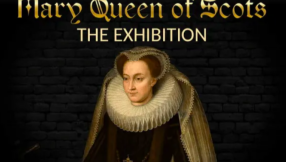
Peterborough Cathedral opens exhibition on Mary, Queen of Scots
Peterborough has opened a new exhibition on Mary, Queen of Scots, that will remain in place until 15 November.








