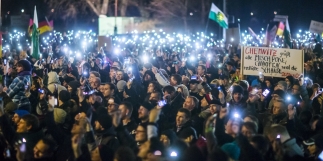
Cologne Cathedral will turn out its lights this evening in protest against the anti-Islamisation marches gaining momentum across Germany.
The marches led by the group Patriotic Europeans Against the Islamisation of the West (Pegida) have grown from a few hundred people gathering in Dresden in October, to 17,000 people at a rally in the eastern city just before Christmas.
The growth of the movement, prompted by the rise in immigration to Germany, has brought widespread condemnation. German Chancellor Angela Merkel said in her New Year address: "I say to all those who go to such demonstrations: do not follow those who have called the rallies because all too often they have prejudice, coldness, even hatred in their hearts."
Counter-protests have also emerged, which many Christians have joined, conveying German support for asylum seekers. The landmark Roman Catholic cathedral in Cologne is responding to fears that the movement will gain traction in other cities around Germany.
"PEGIDA is made up of an astonishingly broad mix of people, ranging from those in the middle of society to racists and the extreme right-wing," cathedral dean Norbert Feldhoff told Reuters.
"By switching off the floodlighting we want to make those on the march stop and think. It is a challenge: consider who you are marching alongside."
The weekly marches in Dresden on Monday evenings are reminiscent of the protests against Communism that took place in East Germany before the fall of the Berlin wall, including using the same slogan "Wir sind das Volk" ("We are the people").
In its 19-point position paper Pegida claims to support asylum for refugees fleeing war, and religious freedom, including welcoming Muslims who are integrated in German society. But the group says they are against Islamist fundamentalism and any hint of Sharia law in Germany.
According to Reuters, an opinion poll last week found that one in eight Germans would join a Pegida march if the group organised one in their town.
Germany's immigration figures are now second only to the United States, and around 200,000 people tried to seek asylum in the country last year, partly due to the influx from Syria. Dresden, however, has one of the lowest immigrant populations in the country.
Some German politicians have sympathised with Pegida's concerns, including the right-wing coalition party AfD that campaigned in the election with an anti-immigration stance.