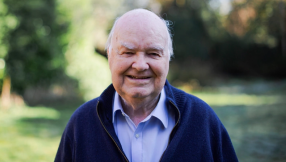
Rev Nicky Gumbel, the recently retired vicar of Holy Trinity Brompton (HTB), has urged a gathering of church leaders in London to be active in evangelism and resist the temptation to "water down" the Gospel.
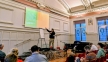
He was speaking at the Ekklesia Conference, organised by Share Jesus International, where he shared some of the lessons he learned during his tenure as vicar of HTB and why evangelism was always a priority there.
"I believe with all my heart it's central to the New Testament. Jesus said go and make disciples of all nations," he said.
"If a church is not involved in evangelism, eventually it will die."
Gumbel, who pioneered the hugely successful Alpha course, emphasised the importance of church unity for successful evangelism.
"If you don't have unity, the world will not believe. If you put evangelism first you have to be renewed, you have to be filled with the Holy Spirit," he said.
He went on to warn pastors against altering the Gospel message.
"It's the most powerful message in the world. The Gospel is the power of God unto salvation for everyone who has faith. The world is seeking spirituality without cost. There is a cost to following Jesus," he said.
He continued: "I think the most loving thing you could do for anyone is introduce someone to Jesus. There are so many injustices in the world - poverty, disease, racial injustice - but the greatest injustice is never to have had the opportunity to hear about Jesus."
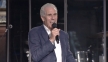
Peter Lynas, UK Director of the Evangelical Alliance, told the gathering that belief today has been "relegated" to an "option".
"We live in an age where spiritual possibility, transcendence and the presence of God seems almost implausible to people ... The minute you try to influence anyone that's where the problem comes," he said.
He continued: "We are living in a world that worships idols, worships parodies of the truth. If being human is fundamentally about being made in the image of God, and we deny a God whose image we are made in, what's left? To deny God is to dehumanise by its very definition."
Also present at the conference was Jo Frost, Director of Communications and Engagement at the Evangelical Alliance, who said that some people do not find the Gospel message "compelling" because it has been "shrunk to become weak and ineffectual".
"We have in some ways ended up with a bit of a half story, so we have very little to offer that is different or unique and powerful to the culture that we find ourselves in," she said.
She continued: "The half story is really simple. It is we are all sinners, you have a problem but Jesus came to solve your problems, rose again and now you can be saved. This is a simple, short gospel that has led to this very individualistic idea of salvation.
"The only response is to dig deeper. The biblical story is complex and it's nuanced because human life is complex and nuanced. It's unique."