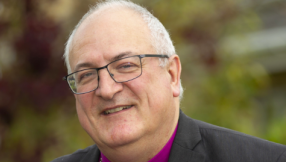
The Bishop of Sheffield has told the Church of England the next five years must see a deeper and more sustained engagement with its current primary goals of contributing to the common good, growing the Church, and re-imagining ministry.
The goals were the subject of a report, Challenges for the Quinquennium, considered by the Church of England General Synod meeting in York on Saturday night.
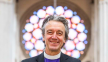
Bishop Steven Croft told Synod members the Church of England needed a "more outward focus" that implied action as well as reflection.
He welcomed the rise in the number of younger vocations to ordained ministry, to 113 candidates under 30 in 2011, the highest figure since 1992.
However, he said there needed to be more diverse vocations and more from different ethnic backgrounds.
The bishop admitted the area of growing the Church and of making disciples was the "most challenging" out of the three goals.
"The Church all over the world is having a similar conversation about the challenge of passing on the Christian faith in a global secular culture," he said.
"We urgently need to deepen that conversation in our own Church."
He urged the Church to pursue serving the common good, transforming ministry, and making disciples "with passion, with hope, with resources, and with courage".
"We need to recover the simple, deep disciplines of learning and teaching the faith to make disciples in annual rhythms and patterns in every parish throughout the land."
The Challenges for the Quinquennium report notes that not only the Church of England, but churches across Western Europe are struggling with "secularism or scandal".
The Church of England's capacity for contributing to the common good, it adds, "will be less than it would wish unless it can also make progress in reversing the long term decline in numbers and increase in the age profile of its membership".
Sir Tony Baldry MP said the Church of England "probably has no more than 20 years to reassert its position as the national Church of England".
He urged a "sense of urgency" about growing the Church and suggested a new campaign to reunite Church members, commenting that the debate over women had "put everyone into tribes".
"We don't have to be paralysed by decline and having to manage decline. We need to identify where growth is taking place. We need to think about how to share the faith with friends and family without wilting with embarrassment," he said.
The Reverend Dr Patrick Richmond, from Norwich, said the Church of England needed to keep its focus on children's and family ministry.
"Why? Because those who are born of non-religious households tend to stay non-religious," he said.
"This is why the rise of Islam is probably in the newspapers. They are having children, they are a fertile community.
"We need to keep hold of the children we already have. Cognitive science of religion shows children are born believers. It is also true people will regain faith in later years if they had it to begin with but we can't invite people back who never had that faith. To build on a foundation is far easier.
Anne Foreman told Synod that Exeter Diocese's commitment to mission and growth had seen some 2,000 new people engage with the Church. Community projects, she explained, were attracting young families and bringing new young people into congregations.
"It's amazing what you can achieve when you have a loo in your church," she quipped.
The Bishop of Sodor and Man, the Right Reverend Robert Paterson, called for a "renewed sense of confidence" in sharing the Christian faith.
A motion was passed by Synod committing the House of Bishops to considering a strategy for the re-evangelisation of England over the next two years.