A Sri Lankan court has sentenced 15 men to consecutive prison terms of up to 260 years for their roles in the 2019 Easter Sunday bombings. The convictions bring one of the main prosecutions over the attacks to a close more than seven years after churches and hotels were devastated across the country.
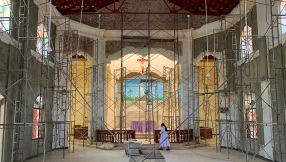
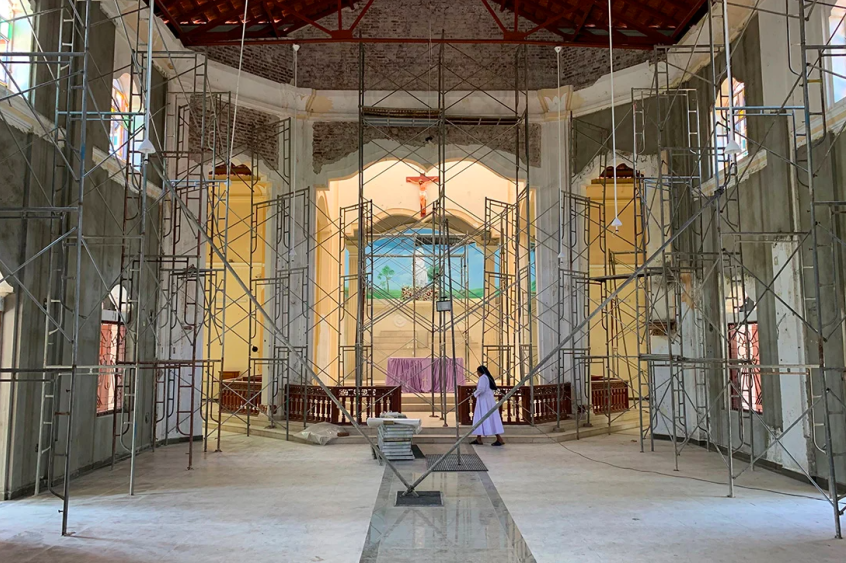
Around 270 people were killed and over 500 injured in coordinated suicide bombings on 21 April 2019. The attacks targeted three churches during Easter services and three luxury hotels.
It was the deadliest attack in Sri Lanka since its civil war ended in 2009. It was linked by investigators to Islamist extremists inspired by the so-called Islamic State.
Among those convicted was Naufer Moulavi, who prosecutors described as the principal planner behind the attacks.
Nine other defendants were acquitted, while one of the original suspects died before the conclusion of the case.
All 15 defendants were sentenced to between 200 and 260 years in prison each for their parts in the atrocities. The court also mandated that their assets be seized.
None of the nine suicide bombers who directly carried out the Easter Sunday attacks survived.
The three-judge High Court bench handed down its ruling on Tuesday after nearly five years of proceedings and amid a heavy police presence. Charges included murder, conspiracy to commit terrorism, and firearms and explosives offences under the Prevention of Terrorism Act.
The verdict closes a major chapter in the prosecution of those accused of involvement in the bombings, but questions over responsibility for the attacks have led to demands for further investigation.
Christian Solidarity Worldwide (CSW) “cautiously” welcomed Tuesday’s sentencing but said that “true justice will remain incomplete until outstanding allegations of state intelligence failures and political manipulation are transparently resolved”.
The National Christian Evangelical Alliance Sri Lanka (NCEASL) said to CSW in a statement that it welcomed the verdict but that investigations must continue.
“After more than seven years, this is an important step towards justice for the victims, survivors and their families," he said.
“However, this verdict should not be the end of the search for truth and accountability.
“Questions remain about whether others were involved in planning, supporting or enabling the attacks. These matters must continue to be investigated in a credible and transparent way.
“Justice must address the full circumstances surrounding the attacks and hold those responsible accountable, based on evidence and due process. It is also important that no religious community is blamed or stigmatised for the actions of individuals.
“We continue to stand with the victims, survivors and families in their pursuit of truth, justice and healing.”
CSW’s founder president Mervyn Thomas said the convictions were “an important step forward in a long-delayed judicial process, and we hope it brings a degree of closure to the families who have spent more than seven years grieving and demanding answers”.
“We remain deeply concerned by persistent and credible allegations that elements of the state may have been complicit in or allowed these attacks to occur,” he said.
“A selective justice that punishes the facilitators while shielding political orchestrators or negligent officials will not help in bringing true peace or reconciliation.
“We call on the Sri Lankan government to ensure that the separate investigations into state intelligence actors are carried out with absolute transparency, free from political interference.
“The government must also actively work to bridge the religious divides worsened by this terrible tragedy, and protect the right to freedom of religion or belief for all citizens.”
The attacks struck churches in Colombo, Negombo and Batticaloa, alongside luxury hotels in the capital, in what was the deliberate targeting of Christians and foreign tourists.
Most of the victims were Sri Lankan, including children and families attending Easter services. Foreign victims included nationals from Britain, India, the US and several other countries. Three children of Danish billionaire Anders Holch Povlsen were among those killed when the Shangri-La hotel was attacked.
Sri Lanka’s Catholic Church has also called for efforts to continue to identify all the masterminds behind the attacks.
Father Jude Krishantha Fernando, director of mass communications for the Archdiocese of Colombo, welcomed the verdict in comments to UCA News but said the Church would continue to demand justice and truth: “Throughout this period, victims suffered a lot, and families collapsed, as in some families, both parents were killed in the attack. The judgment is a consolation to their plight.”
Sri Lankan security officials have faced scrutiny following the bombings, with parliamentary investigators finding that they failed to respond to repeated warnings of an imminent attack.
The BBC reports that Sri Lankan authorities subsequently acknowledged “a major intelligence lapse”, and that information provided by India ahead of the attacks was not adequately passed on to the appropriate authorities.
A 2023 Supreme Court ruling required former president Maithripala Sirisena and other former senior officials to pay compensation over failures to prevent the attacks.
In July, two former senior officials were sentenced to death after being convicted of criminal negligence in connection with their alleged failure to respond to intelligence warnings.
Sri Lanka’s defence ministry has denied any involvement in the attacks.