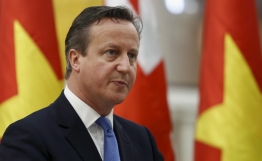
A spokeswoman for David Cameron has described a video featuring a young boy and an older masked militant speaking with British accents as "a propaganda tool that serves as a reminder of the barbarity of the group".
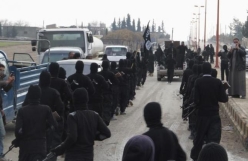
The video, which has not been independently verified, shows the killing of five men accused of spying for the West while the masked man warns that Islamic State will one day occupy Britain.
"We are examining the content of the video and the prime minister is being kept updated on that," his spokeswoman told reporters.
"It serves as a reminder of the barbarity of Daesh and what the world faces with these terrorists. It is also clearly a propaganda tool and should be treated as such," she said.
When asked whether the men shown had been spies, the spokeswoman declined to comment on intelligence matters but said the group's past propaganda had not all been true.
After the killings of the five men, a young English-speaking boy, who is wearing a black bandana and appears to be about four or five years old, is shown saying: "So go kill the kuffar [unbelievers] right over there."
The video echoes previous productions featuring 'Jihadi John' – Mohammed Emwazi, a British Islamic State member who appeared in several videos in which hostages were killed before his own death in an air strike late last year.
The man in the latest video says: "This is a message to David Cameron, O slave of the White House, O mule of the Jews."
He continues: "How strange it is that a leader of a small island threatens us with a handful of planes. One would have thought you'd have learned the lessons of your pathetic master in Washington and his failed campaign against the Islamic State."
While the man has not yet been identified, some news outlets speculated that he might be Siddhartha Dhar, who fled to join the terror group in Syria while on police bail in 2014.
His sister, Konika Dhar, conceded the voice sounded "a bit like"her brother, but she did not believe it was him.
If it was him, she told the Daily Mail: "I am going to kill him myself. He is going to come back and I am going to kill him if he has done this.
"I can't believe it. This is just so shocking for me. I don't know what the authorities are doing to confirm the identity, but I need to know if it is."
In November, British officials said that up to 800 Britons had traveled to Iraq and Syria, some to join Islamic State. About half had returned home while about 70 were believed to have been killed.
Additional reporting by Reuters.