Britain's debate on Europe is driven by hateful lies, national resentment and the scapegoating of Romanian and Bulgarian immigrants, European Parliament President Martin Schulz on Thursday.
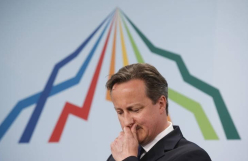
Schulz made his remarks in a speech in London after holding talks with Prime Minister David Cameron, who has promised to renegotiate Britain's ties with the EU before holding an in-out membership referendum by the end of 2017.
Cameron has made restricting EU migrants' access to British welfare payments a key part of that effort. Although Schulz did not criticise him by name, his comments are likely to be interpreted as a stinging rebuke to the British leader.
"There are attempts by people in Europe and also in this country to create new barriers between countries," Schulz said. "Stirring a feeling of panic over so-called benefit tourists from Romania and Bulgaria wanting to plunder the social systems of the host countries."
"Outright lies told ... What makes me sad and angry in all this debate is the undertone of national resentment. Hatred is spread. People are used as scapegoats."
A spokeswoman for Cameron had earlier described his meeting with Schulz on Thursday morning as good, though she had said further discussions between the two men would be needed.
"There will be lots of different views expressed during this renegotiation," she had said.
Cameron has touted his ideas in meetings with more than 20 EU counterparts so far and is due to formally present his reform plans to EU leaders in Brussels next week. He says he is confident of securing concessions and wants Britain to remain in a reformed EU.
Others aren't so sanguine.
At home, Cameron has weathered a parliamentary rebellion from his own Eurosceptic lawmakers over what they see as attempts to rig the process in favour of voting to stay in the bloc.
And abroad, his efforts to win over EU leaders have drawn a mixed response.
Schulz, a German social democrat, had earlier said he thought Cameron had "no chance" of getting the EU to reopen its founding treaties, and had urged him to compromise over what he described as "controversial" proposals.
Schulz also said he thought Cameron would fail in his aim to stop EU migrants accessing his country's welfare payments for four years after they arrive in Britain, but might have some luck when it came to agreeing new EU-wide rules to fight abuse of member states' social security systems.
Cameron said he realised his reform drive was tricky.
"We have got a long way to go in this reform and renegotiation, a lot of difficult issues to discuss," he said.
Cameron also met Irish Prime Minister Enda Kenny on Thursday and Prime Minister Mir Cerrado in Slovenia. On Friday, he will head to Bratislava, where he will hold talks with the leaders of Slovakia and the Czech Republic.