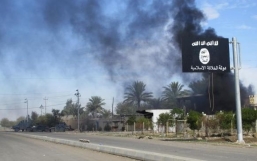
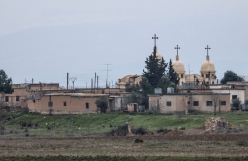
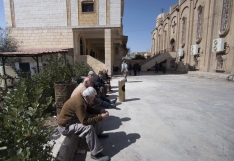
The Assyrian Christian villages raided and inhabited by Islamic State militants in February have now been retaken by Kurdish forces, local clergy have confirmed.
"All the villages along the Khabour River have been liberated," Father Emanuel Youkhana told Catholic News Service. He leads the Christian Aid Program Northern Iraq, which is working to support Syrian Christians displaced by ISIS. "This is very happy news," he added.
According to Father Youkhana, clergy have already begun returning to their villages. Father Bakos, of Tal Tamar village, "rang the church bell to celebrate," he said, though urged villagers not to follow suit too quickly because Kurdish forces were still removing mines left by the jihadists.
According to A Demand For Action (ADFA), 232 Assyrians are still missing from the dawn raids on February 23, abducted by IS militants, though some hostages have been released. Father Youkhana said those that remain in captivity are thought to be being treated well however, and another Catholic priest based in Jordan, Father Rifat Bader, expressed a hope that they would be returned safely soon.
"It's a sad and complicated situation," he told CNS. "You don't know how they will be used."
Assyrian Christians have faced significant persecution during ISIS' rise to prominence. Some 3,000 were forced to flee from the Khabour region, and in March, militants bulldozed the ancient Assyrian cities of Nimrud and Hatra, both of which are UNESCO World Heritage sites.
Assyrian refugees in Lebanon have now revealed the levels of brutality perpetrated by ISIS. Jack Zayya, who fled from Al-Hasakah in Syria to Beirut, told World Crunch that children were forced to watch beheadings take place. Christians were forbidden from driving or riding in cars and from wearing crucifixes. Women were forced to wear Islamic dress, and church crosses were destroyed.
"We were obligated to watch public executions. What kind of world is that for kids to grow up in? They were always scared," Zayya said.
An ancient branch of Christianity, the Assyrian Church of the East has roots dating back to the 1st century AD. Assyrian Christians speak Aramaic, the language of Jesus, and have origins in ancient Mesopotamia – a territory which is now spread over modern day northern Iraq, north-east Syria and south-eastern Turkey.
ISIS' treatment of Assyrian Christians has been condemned by the UN Security Council, which has called for the "immediate and unconditional" release of all those captured.