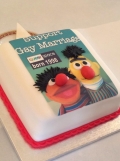
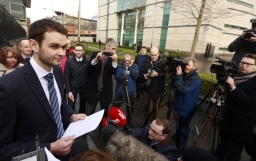
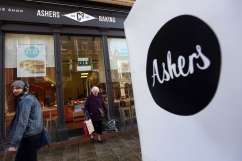
The co-author of the Law and Religion blog, Frank Cranmer, told me this morning that the Ashers bakery judgment would generate "more heat than light", certainly in the immediate aftermath.
Look at the tweets under the #ashers hashtag, and he's right. Is it a victory for freedom of speech and a defeat for the reactionary forces of homophobia? Is it a defeat for traditional Christian values and a victory for the godless hordes of liberalism? Both views are amply represented on social media.
Ashers' lawyers are considering an appeal and the judgment will be studied carefully when tempers have cooled. However, what's clear is that the real winner is not what is disparagingly called 'the gay lobby', but a law which is not fit for purpose when it has to deal with complex human convictions and motivations. And the real loser is not Ashers, but liberal, tolerant civil society.
This case reinforces calls already made by no less a person than the Deputy President of the Supreme Court, Lady Hale, for a provision in law of "reasonable accommodation" for religious beliefs. (MLA Paul Givan is seeking to introduce such a law in Northern Ireland, where it will fail because of opposition by Sinn Fein and others.) The truth is that rights do compete, and it has been the repeated experience of people of a conservative religious faith that their rights don't count as much as those of others.
Gay people have every right to be provided with goods and services without suffering any kind of discrimination. But people of faith have every right to hold their convictions, and sometimes these convictions will bring them into conflict with the mainstream of society.
How society treats those who don't conform is a measure of its civilisation. Gay people have been on the wrong side of that divide for far, far too long. But in righting old wrongs we need to be sure that we don't perpetuate new ones.
This is not an argument for unfettered discrimination. But at the moment the law is too blunt an instrument to be able to make the crucial distinctions which society needs it to make. If it can be reformed and reshaped in a way that protects the rights of gay people but acknowledges the convictions of conservative people of faith, the attempt should be made.
If it fails: well, Christians in the UK might find life a little less comfortable, but Christianity is not wedded to Christendom. We will survive.
Follow@RevMarkWoods on Twitter.