
A leading Catholic clergyman has said that Britain has increasingly abandoned spiritual and moral principles in favour of secularism and warned that such a change had damaged social cohesion.
The Most Rev Vincent Nichols, Archbishop of Birmingham, who is also a contender to replace Cardinal Cormac Murphy-O’Connor, said that faith had become only a private matter while the nation continues to define itself by secular and material standards, reports The Telegraph.
The Archbishop claimed that social values such as compassion, respect and tolerance would be lost if disconnected from their roots in Christian teaching. He also argued that schools should be allowed to teach right and wrong and claims that critics do not realise the importance of the contribution of faith schools.
Writing in a book about the rise of secularism, the Archbishop said, "Our politicians seem to live in a different world, a world that is purely secular and material, a world that does not permit a mature consideration of the key role of religious belief.
"Behind this is the assertion that religious influences are bad for you, and that ignorance of religion is better than exposure to it and the study of it.
"Why is this so? It lies in the distorted and truncated notion of reason which shapes our society and, to a large extent, the education it offers.
"Quite simply we have sold our soul to a positivistic understanding of reason. By this is meant that knowledge and reasoning are limited to what can be positively seen, measured and physically tested through hypothesis, experiment and observation.
"What positive knowledge and reasoning cannot do is provide anything that is normative in value or moral judgement. They can discover, magnificently, what can be done. They cannot, properly, provide and answer to the question, 'But should it be done?' "Moral reasoning overcomes the.. 'individualism' of a positivist culture.
"A society which limits itself - and its education - to a positivistic understanding of reason will find itself unable to determine shared moral principles and values. Such a society will lack cohesion."
He added, "How ironic it is that in our public culture a cynicism about religious faith has taken hold. Have we, quite simply, lost our nerve when it comes to the reality of religious belief?
"We have lost our nerve because, as a society, we have taken the road of relegating all these matters to the sphere of the private and of seeking to build our society, our cohesiveness, on the secular/material instead.
"Yet there will never be a truly cohesive society that does not take seriously the spiritual quest of its people... The rigorously secular, liberal project of community cohesion is mistaken in its fundamental view of the human person and simply will not work."
The book is titled “The Nation That God Forgot” and was co-edited by Edward Leigh, a Conservative MP. Leigh claimed that Britain was the “most extreme” case of secularisation in West, reports the Telegraph.




-

More than one in four US Protestant churchgoers believe some biblical truths become outdated
-
Wycliffe celebrates ‘remarkable moment’ as Bible translation advances at rapid pace
-

Could the Church face a ‘silver uprising’?
-

Christian leaders issue ‘sober and urgent call’ for Western Church to prepare for disruption
-

Church in Wales pauses plans to allow gay marriage
-

Christian social worker returns to Court of Appeal in dispute over withdrawn job offer
Most Popular
News

Majority back Ireland’s three-day abortion waiting period, poll finds
A new poll has found majority support for retaining Ireland’s mandatory three-day waiting period before an abortion, as lawmakers continue to consider legislation that would remove the requirement.
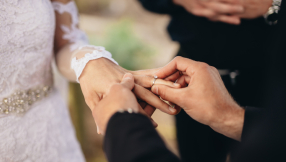
ONS figures show 'good' outlook for married couples
The Coalition for Marriage (CFM) has welcomed new figures suggesting that married couples are increasingly staying together.
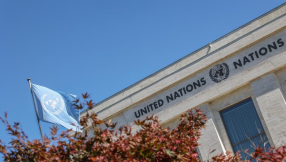
Christians condemn sexual violence following UN report on Russia-Ukraine conflict
Most cases of sexual violence documented were against male prisoners of war.
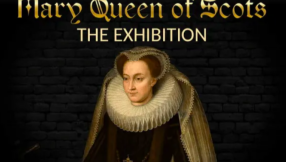
Peterborough Cathedral opens exhibition on Mary, Queen of Scots
Peterborough has opened a new exhibition on Mary, Queen of Scots, that will remain in place until 15 November.








