Dr Sharon Dirckx became a Christian in her early twenties. The journey involved asking many difficult questions of the Christians around her – an area that she later discovered was called apologetics. Her own call to become an apologist began eight years later while pursuing post-doctoral research at the Medical College of Wisconsin. This sparked a passion for defending and commending faith in Jesus Christ and introduced her to the work of Ravi Zacharias.
Sharon, alongside her husband Conrad, soon moved back to the UK to study at the Oxford Centre for Christian Apologetics (OCCA), which was being established to train and equip the next generation of apologists. Soon after finishing her OCCA year, she started working as a tutor at the Centre, writing and speaking around the UK. In light of her own personal journey as an apologist, the question of suffering has been pivotal. Sharon addresses this in her book Why?, explaining how Christianity faces suffering and evil head-on, and below tackles some of the big questions this throws up:
How can we explain the dilemma of God's goodness in the face of suffering?
If God doesn't exist there is no one to ask your 'why' question to, and the essence of my book is that we ask 'why' because God is real – because there is someone to whom our question can be addressed. The fact that we ask at all is evidence for his existence and not against it.
The thing that it really comes down to in terms of God's response to suffering is that God doesn't always offer us answers. Instead, he offers us himself. In God, we have the only being ever who has aligned himself with humanity by stepping into human history as a person, fully man, fully God.
Jesus asked on the cross, "My God, My God, why have you forsaken me?" In his humanity, he is genuinely asking a question and experiencing a forsakenness, but in his divinity he is also quoting Psalm 22, which ends in victory. The psalm is incredibly prophetic, describing the process of crucifixion hundreds of years before its invention. You don't see anywhere else in any other world religion this God, who became man, suffering with us on a cross.
What difference does a man on a cross make to you in 21st Century Britain?
When a situation is really bad between two people, in order to try to mend it you need mediation. For mediation to be effective you need someone who understands the problem but is not part of it. So to solve the issue, and the problem of, evil and suffering, we need someone who understands it but has never contributed to it. The only person in history who fulfils this criterion is Jesus Christ.
What in your experience has brought you to write on your faith and the reality of suffering?
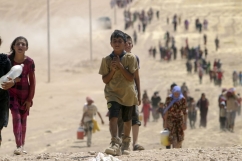
During my year at the OCCA I was involved in outreach in the City of Plymouth. With my background in brain imaging, I was prepared to go and speak on the topic of why science has not disproved God. Yet the response was that those who invited me to speak didn't need a talk on science, but rather the area of suffering. This had a galvanising effect on me. Suffering is so universal. Perhaps behind a scientific question often lies a question or experience of suffering.
From that point, I wanted to address suffering in two ways. Firstly, through the intellectual questions we have, and secondly, through our real life experiences. While writing, God allowed our family to experience suffering of our own, which hugely impacted my approach and increased awareness of the answers that work and the answers that don't. Some of my biggest challenges have been when I have tried to balance all the different dynamics of being an apologist, wife, mother and all the different relationships we have.
Why would you recommend the Why Series?
Suffering is one of the hardest questions of all. We will be addressing it not just on an abstract level but at a personal level that all people, whatever their beliefs or background, can relate to.
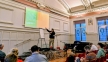
Happening on Saturday, May 7 in London, the Why Series is a new annual event addressing a key 'why' question. Amy Orr-Ewing, Michael Ramsden, Vince Vitale and Nabeel Qureshi will be exploring many different aspects of the dilemma of God and suffering. Sharon will be addressing natural disasters, physical evil and the goodness of God. You can book online here.