
|PIC1|Sam Paul AICC, National Secretary of the All India Christian Council, speaks to Christian Today about the recent violence against Christians by militants in Orissa state.
CT: The situation in Orissa sprang very suddenly onto the international headlines but do the roots of the violence go much further back than the death of the Hindu leader in August?
SP: Yes. Going back to the first wave of violence in December in the same place there were over 5,000 people displaced and over 100 churches demolished and 750 homes burned down in December and we kept saying to the government to please take firm action so that this won't repeat.
But this is definitely a sequence and it is definitely a sign of the impunity that the attackers have enjoyed. So the 5,000 displaced now has become 50,000 and the dead were 14 or 15 and now 60 and 200 unaccounted for. We don't know if they are dead or in the forest. Most of them we fear are dead but we can't say that because of non-verification.
The Hindu swami was killed but I want to say that he is called a swami but his affiliation and placement there was with the extremist Vishwa Hindu Parishad, he was national vice president. Actually Hindus and Christians live in peace in India. I would hate if anyone in the media says that Hindus attacked Christians. That's not right, that's not true. Hindus don't attack Christians. Hindus and Christians are friends, Hinduism in general is peaceful, co-existent, a brotherhood, accommodating come what may. This swami belonged to an extremist fundamentalist sect of Hinduism. The Hinduism they are propagating is for political ends to demonise minorities, Muslims and Christians, and to gain political power.
For 30 years he had been spreading hate in this region, this is going 30 years back. The swami was inciting mobs in December to burn the homes of Christians and kill Christians. The government is saying this is an issue between the Dalits and tribals and even goes as far as saying that there is no anti-Christian violence there, even though in reality both Dalit and tribal Christians were attacked. The six weeks since the 24 August is an example of what was going on under the surface, it is just a symptom of what is going on and what could happen all across India, not only in Orissa.
The particular wave of violence in August, the killing was on the 23rd and lasted for around weeks without control of the government or being stopped, which itself shows the connivance of the authority in either direct or indirect form because you only need at least two to three hours to stop any violence if you have the will and the instructions from the top and the decision is backed politically. For it to go on for six weeks is an expressive statement.
The way forward, the way to see this is if the state and the centre stop shifting the responsibility to one another. The state government says the central government did not do enough, the central government says to the state government you did not do enough.
CT: Why do you think the central government appears to be washing its hands of any responsibility?
SP: The central government is going by the book. According to the book, the law and order of a state is a state affair. But there is another rule in the book that they don't want to practise. Article 355 which can be invoked by the president on two counts â" if there is external aggression or internal disturbance.
We believe the massive displacement and creation of a warzone in one or two states is an internal disturbance so we wanted the president to put troops there so that the violence would come to an end. Of course, now the violence has stopped so the issue now is the condition of the relief camps, which are deplorable.
The relief camps are run by the government and we have reports of five children that have died in the relief camps and long queues to get the food. I was in a camp with 2,500 people and just four toilets, so there are very bad sanitary conditions where disease can easily break out. The state government's relief activity has to be stepped up properly and adequately so that people feel they have been compensated.
CT: What should the government do to protect the Christians from further attacks?
Access to police has to be created because where the violence is happening Kandhamal district is a huge geographical mountainous terrain so there are not enough police stations and they cannot keep up with the law and order. If there are 50,000 displaced and 5,000 homes burnt then there are 5,000 complaints and then they need access to the police. So there must be more police stations and so that investigations can be done and people can feel that the largest democracy is also taking care of them.
CT: But is it not also the case that the police don't deal with the extremists? So when you say that more police should be deployed then presumably the government is going to have to make sure that they will do their jobs?
SP: Yes. There is a real lack of faith because police were just watching while this was going on and almost conniving in silence. The other thing to ask for would be fast track courts so that the court process would not take 10 or 15 years after the incident when people have grown up and moved on. That happens in many cases.
The main issue is that they make sure peace and security returns to that place. That means that those who committed this violence, the animosity in the name of religion, in the name of falsehood â" that the swami was killed by Christians and that there were forced conversations, which is false because there were no forced conversions in Orissa.
For peace to return, justice must be done and justice will only be done if the government has more will than it has now. We appreciate the prime minister says he felt ashamed but what did he do about it? He was very ashamed that Sarkozy in France said to him about it and that there are 50,000 people in the forest for 10 days before going to the relief camps. Every one of them is his people and their insecurity represents his insufficiency.
CT: So it's not safe for them to go back?
SP: There were two people killed who wanted to see what state their homes were in and so left the relief camps. It is absolutely unsafe to go back right now. I was there last week with Baroness Cox and it looks like a warzone. And for what? These tribals who are just following Jesus Christ. Is that a crime, that they dare to follow their choice of religion?
It is not only an attack on Christians but on India's secularism, on India's democratic principles that it is supposed to follow. We've put rockets to the moon and so many great things are happening internationally for India but why are we not taking care of basics â" safety, security, a fundamental right of livelihood, practising your religion of choice.
CT: Is it possible to enter into dialogue with the extremists? Are they approachable?
SP: We have said we will dialogue with the Hindu community leaders but with the extremists, it is like asking the US to dialogue with Bin Laden. Stop the violence first and come to a common ground that we value the constitution and abide by it. We will dialogue with every person but not the cultural terrorists.
Dialogue must begin not with the extremists but with the religious leaders and community leaders.
CT: What support would you like to receive from Christians in the UK?
SP: First is prayer that the authorities would act swiftly to implement justice. Then we would like to support the victims.
52% OFF

Ekouaer Baggy Bib Overalls for Women - Loose Fit Jumpsuit with Adjustable Straps & 5 Pockets
$12 $24.99
60% OFF

Ekouaer Women's Satin Silky Pajama Set - Short Sleeve Pullover Top & Wide-Leg Pants
$13.99 $34.99
20% OFF

LIVOWALNY 200W Power Inverter for DeWALT 20V Battery - Portable 110V AC Outlet & USB-C Station
$23.89 $29.99
40% OFF

ANCHEER 38'' Toddler Trampoline - 150lb Capacity Foldable Mini Trampoline with Adjustable Handle
$47.99 $79.99
23% OFF

Cordless Fuel Transfer Pump - 3.2 GPM Auto-Stop Pump for DeWalt 20V & Milwaukee 18V
$61.99 $79.99
55% OFF

Ekouaer 3-Piece Maternity & Nursing Pajamas Set - Short Sleeve Top with Shorts and Pants
$14.99 $32.99
20% OFF

EVIQO 48 Amp NACS Level 2 EV Charger - Hardwired Smart WiFi Wall Charger for Tesla
$368.51 $458.55
54% OFF

Creality Space Pi X4L 4-Spool 3D Printer Filament Dryer Box with Dual Heating Chambers - Efficient Drying Solution
$92 $199
54% OFF

Vevor 400lbs Folding Hand Truck - Versatile 2-in-1 Dolly
$35 $76

Affordable Mofesun Galvanized Metal Raised Garden Beds - 2 Pack
$59.99 $59.99
-

Kemi Badenoch: End investigations into Darlington nurses and Jennifer Melle
-

Newsboys launch legal action against MercyMe, concert promoters and media
-

Nick Vujicic responds to rumours he is dead by confirming he is alive and well
-

When the gospel is criminalised, who really suffers the consequences?
News
-

Coptic Christian YouTuber sentenced to five years in Egypt over faith-based online videos
-

Global Christianity faces major challenges in 2026 despite signs of growth, new report finds
-

More details of Steve Maile arrest emerge
-

Enoch Burke saga continues as hearing collapses
-

Lib Dems admit unlawful discrimination against Christian parliamentary candidate
-

Missing pages from ancient Bible manuscript recovered
Most Popular
News
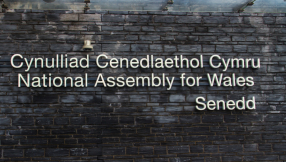
Pro-life campaign launched for Welsh Parliament elections
Candidates are being asked to make their positions on abortion and assisted suicide clear.

Thousands expected as ‘Jesus March’ returns to London for Pentecost
Thousands of Christians from across the UK are set to gather in central London this Pentecost weekend for a large-scale public event celebrating the Christian faith.

US churchgoers report stronger faith and renewed commitment five years after Covid pandemic
A major new survey of over 24,000 Christian churchgoers in the US suggests many believe their faith and congregational life have strengthened in the years since the Covid-19 pandemic.
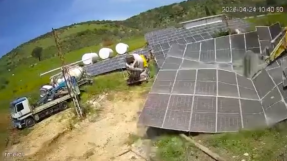
Israeli troops investigated after damage to solar panels in Christian village in Lebanon
Israeli soldiers are under investigation after footage appeared to show military equipment being used to wreck solar panels in a Christian village in southern Lebanon.
Ekouaer Baggy Bib Overalls for Women - Loose Fit Jumpsuit with Adjustable Straps & 5 Pockets
$12
Ekouaer Women's Satin Silky Pajama Set - Short Sleeve Pullover Top & Wide-Leg Pants
$13.99
LIVOWALNY 200W Power Inverter for DeWALT 20V Battery - Portable 110V AC Outlet & USB-C Station
$23.89
ANCHEER 38'' Toddler Trampoline - 150lb Capacity Foldable Mini Trampoline with Adjustable Handle
$47.99
Cordless Fuel Transfer Pump - 3.2 GPM Auto-Stop Pump for DeWalt 20V & Milwaukee 18V
$61.99
Ekouaer 3-Piece Maternity & Nursing Pajamas Set - Short Sleeve Top with Shorts and Pants
$14.99
EVIQO 48 Amp NACS Level 2 EV Charger - Hardwired Smart WiFi Wall Charger for Tesla
$368.51
Creality Space Pi X4L 4-Spool 3D Printer Filament Dryer Box with Dual Heating Chambers - Efficient Drying Solution
$92
Vevor 400lbs Folding Hand Truck - Versatile 2-in-1 Dolly
$35
Affordable Mofesun Galvanized Metal Raised Garden Beds - 2 Pack
$59.99