
Whether traditional in form or an innovative fresh expression, the common task of the church is to help people to see God, themselves and the world as never before.
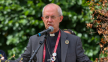
So said the Archbishop of Canterbury, Dr Rowan Williams, at a Fresh Expressions conference held in Oxford on Friday to explore the question of how the “mixed economy” of church might work in practice.
Mixed economy is a term first coined by Dr Williams referring to the coexistence of fresh expressions and ‘inherited’ forms of church.
Addressing Fresh Expressions practitioners from across the UK, the Archbishop explained his vision of the mixed economy as one in which churches in their various forms work alongside one another in helping people encounter Jesus, and discipling them at whatever stage in their faith journeys they may be at.
The future for Britain’s churches, he suggested, lies in striking a balance between “regular and demanding” church cell groups, community-wide gatherings with a capacity for “nudging others towards new vision”, and large-scale festivals and events that give people a glimpse of what the church is trying to create in the world.
Whether in inherited models of church or in fresh expressions, the Archbishop said that the “real heart” for the next generation would inevitably be bound up in the small group – or cell group - where people are able to form bonds of trust in one another.
“Building personal, face-to-face relationships is one of the things that will make the relationship between inherited patterns of church and new ones viable,” he said.
Although the hallmark of the mixed economy is a diversity of styles, the Archbishop stressed that the mixed economy was not about churches working in isolation.
“We are [not] looking for a church which is a sort of Balkan map of little independent, autonomous, self-serving groups doing what they fancy, finding the style that suits them, which is always a danger,” he said.
“[We are looking for] a context within which there is a flow of communication, good news and challenge between different styles of church life, which may respond to different personalities in different stages along the journey.
“What holds them together is Jesus, and what Jesus helps you see, and [through that] the landscape is transformed.”
The Archbishop suggested that the starting point for every church and every fresh expression was the encounter between Jesus and others.
“The landscape gets to look different when Jesus is around. People see things in a new way, themselves and one another, God and God’s world,” he said.
“Isn’t part of what we are about in mission trying to be the sort of people or communities around which people can see things differently?
“And that’s not abstract theory because when you see God and yourself differently things really do happen. You become a different person.”
He added: “When we talk about fresh expressions, I would like to think we are talking about countless local enterprises of vision where people are being encouraged and nourished and enabled to see what they hadn’t seen before.”
Fresh Expressions is a joint venture between the Church of England, Methodist Church and United Reformed Church, launched in 2004 to huge success.
The idea behind the initiative is to reach those untouched by existing forms of churches.
To date, more than 2,100 people have taken part in a Fresh Expressions training course and Fresh Expressions Area Strategy Teams have been established in 30 different locations.
Also speaking at the conference was Archbishops’ Missioner and Fresh Expressions Team Leader Bishop Graham Cray, who urged even more churches to start up their own fresh expressions.
“The great majority of fresh expressions are new fledgling congregations meeting in a welcoming place and at a convenient time for those who previously did not go to church or follow Christ, and they are well within the capability of the average local church,” he said.
“We need to see thousands and thousands more average local churches becoming mixed economy.”
Bishop Cray said a “three-part ecology” of church was starting to emerge, with “new imagination” in relation to possible forms of church at the grassroots level, a “climate of permission and encouragement” at the leadership level, and the development of nationally available resources for mission and training.
“As we engage with a missionary God in a multi-choice world where the impact of Christendom is rapidly fading, we are being reshaped by the Holy Spirit as we learn again how to be missionary in our own land,” he said.
Key to the mixed economy working, he added, was the recognition that traditional and innovative forms of church work together.
He said: “Mixed economy is not intended to be a device to allow two separate things to happen at the same time.
“It requires partnership where traditional churches and fresh expressions of church pray for one another, support one another, and learn from one another.”




-

Alister McGrath: New Atheism has ‘tanked’
-
Justin Welby says government reparations for slavery a ‘moral evil’
-

European hate speech laws are ‘dangerous’, says politician prosecuted for Christian beliefs
-

Belfast City Council votes again to celebrate abortion after failed attempt
-

Ex-BBC reporter tells of 'cabal' of journalists who influenced trans coverage
-

Is religion making a comeback among young Americans? Study urges caution
Most Popular
News

'Passion' star Jim Caviezel recalls the time Jesus appeared to him
Actor Jim Caviezel recently claimed that Jesus Christ supernaturally appeared to him more than 20 years ago as he was considering whether to take the starring role in "The Passion of the Christ," Mel Gibson's 2004 film depicting the Crucifixion.
Frasier star Kelsey Grammer says standing up for Jesus is worth the cost
Emmy Award-winning actor Kelsey Grammer has said he’ll never deny his faith in Jesus Christ, even if standing by his beliefs comes at a personal cost, and shared why he believes Christians have a responsibility to remain steadfast in an increasingly fractured culture.
Why John Stott’s ‘Christian Counter-Culture’ still challenges the church
After more than 45 years, John Stott’s teaching on the Sermon on the Mount remains a fresh challenge to a church too comfortable with the world.

MP challenges plans to light up Belfast City Hall in support of abortion on Easter Sunday
Carla Lockhart MP has spoken out against plans to light up Belfast City Hall in support of abortion on Easter Sunday.





