During my long summer holidays I used to love roaming through the canyons of New Mexico, getting saturated and bone cold on the Yorkshire Moors and most of all developing an enduring fascination with Mesopotamia and ancient Egypt, without ever leaving my sofa. Courtesy of Judy Blume, Emily Bronte and Agatha Christie respectively, I witnessed, touched and tasted things that expanded my horizons far beyond my home counties cul-de-sac.
When a guy from my church first went to prison, we sent books and visited. He requested more books, we sent books that looked at the Bible in detail, study guides to Corinthians, to Acts. He wanted to keep busy, do constructive things, to let his mind be elsewhere and away from soul-crushing reality of where he was.
The ability of books to allow us to escape, to travel this world and others, to teach us, to enable us to get under the skin of another, to understand ourselves, to engender hope – in short to change us for the better – is why there has been such an outcry against Justice Secretary Chris Grayling's book ban. The banning of books is a potent cultural symbol, redolent of oppressive regimes or extremist factions. It is an act of fear: we cannot control the glorious alchemy of written word on page exploding as it hits the reader's imagination. And it is a particularly cruel nonsense to deny the multifarious opportunities afforded by reading to a group of people who have often had far less opportunity in other parts of life: those in prison.
The 'book ban', more truthfully a book limit, is part of the Incentives and Earned Privileges scheme introduced last November. Those in prison can no longer receive packages from outside that might include books – whether read for study or pleasure. This week there was the first legal challenge to this, with a woman serving a life sentence said to be 'in despair' without books being sent in to keep her motivated and incentivised. This case cuts to the heart of the debate – do we need to care about the diminished motivation of someone on a life sentence? Is she there to be punished or to change? If Jesus was the Lord Chancellor would he care about reading material?
If we believe in the God of the prodigal son, the God of Matthew 25 who encourages us to feed the hungry, look after the sick, visit those in prison, the God who as he hung on a cross welcomed a criminal into heaven, we know that this God cares deeply about those in prison and about our restoration, healing and wholeness. We need prisons and we need them to be run in a way that encourages new narratives for being, living and doing. How do you begin to rewrite a life story when it's chock full of terrible experiences and identities like junkie, prostitute and thief? How can the imagination stretch sufficiently to begin to hope and dream of different life outcomes? In prison, both faith and books allow escape to another plain, an extending of oneself, an engendering of empathy and they constructively pass the long hours of those behind bars at little or no cost to the tax payer. You'd think we'd be pumping our prisons full of books and chaplaincy staff. Apparently, the opposite is true.
We are people of the book. One of our primary ways of relating to our God and Saviour is reading the narrative accounts of the Jewish nation, of Jesus Christ and the followers he left on earth. We should understand more than most about the importance of a book in changing lives. That is why we must stand with those opposing these punitive measures that do nothing to engender hope and rob people inside of another avenue for living life to the full.
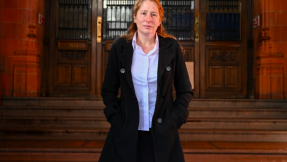
Sara Hyde works with young women in the Criminal Justice System as a coach mentor, having worked for six years in prisons as a counsellor and arts practitioner. She is an active member of the Labour Party and writes and speaks on criminal justice, arts' role in society, feminism and faith.