Humans are limited but we are freed from our limitations by Christ who took them upon himself, the Archbishop of Canterbury shared this week.
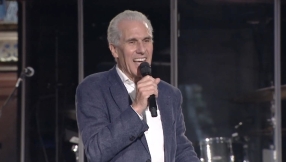
Archbishop Justin Welby was reflecting on the meaning of Jesus for humankind on BBC Radio 2 with Jeremy Vine.
As a culture, we may want to go faster and achieve more, but "to be authentically human is to be limited", he said.
"Essential to grasping what it means to be human is to recognise our limitations," he said.
He acknowledged human beings could be disappointed by that, feeling that our limitations "make us less than human", but he encouraged others to see it differently, inviting listeners irrespective of their faith to behold the man Jesus and see his humanity.
"There is no one who has ever lived this well ... and what I point to particularly are his limitations," he said.
These limitations, he explained, were seen in his trial when his hands were bound, helpless in the face of execution.
"Sometimes the best humanity is seen under the worst conditions ... Jesus prays for the forgiveness of those who torture him. What amazing and beautiful humanity.
"And then when he gets taken off to execution carrying his cross, he can't take the burden and somebody else has to. Of course, in our Stand-On-Your-Own-Two-Feet culture, we seem to believe that if we are truly human we don't need other people. But this human has need of others. And his words and his example echo through the ages: 'Love one another.'"
Then Jesus goes to face the greatest limitation for all humans - death - but he faces it freely and faithfully and "ends up with the freest and best human life ever".
"In this human life, because of this particular human life, I believe we can all discover who we truly are, how we can truly be human. Here is authentic living and dying – a life among people, for people, with people."
The Archbishop went on to explain that Christ's selfless death takes away the limitations of selfishness that imprison people and stop them from being truly human.
As forgiven and freed people, the Archbishop concludes by inviting people to join together in God-centred community.
"It's not limitation that needs overcoming if we are to be fully human, it's isolation. For I am not myself by myself, but I am myself most truly when I am in community with others – and especially in community with God in whose image we are made," he said.
"And in whom I find I am loved with all my limitations, by Jesus whose love has no limits."